


Across the UK and Europe, water infrastructure is entering a defining decade. A system most people rarely gave a second thought – to pipes, treatment works, and drainage networks – is now under intense scrutiny.
Climate volatility, population growth, and regulatory pressure are exposing the limits of water infrastructure designed for a different era. With weather patterns changing, towns and cities have suddenly become susceptible to flooding; their ageing water assets are not designed to cope, and there is no integrated technology, of course, to support real-time monitoring or early warning signs.
The situation is so serious that the European Union (EU) has just raised water to the status of critical infrastructure, alongside competitiveness, defence, housing, and energy – and is reallocating funds committed to those four pillars to support water resilience across 16 member states.
In the UK, AMP8 – the next regulatory cycle for UK water companies, overseen by Ofwat – features a record £104bn investment to improve infrastructure, reduce leakage, and curb pollution.
Caryn Novak, a Civil and Environmental Engineer at Autodesk, a leading technology company for the construction industry, says we are on the cusp of a “once-in-a-generation” investment cycle and the moment must be embraced to fundamentally shift how water systems are planned, managed, and operated.
Unprecedented transparency accelerating the need for change
Much of the existing asset base is nearing end-of-life. Combined sewer systems (originally designed to handle wastewater and stormwater together) are increasingly overwhelmed by modern demands. More people, more impermeable surfaces, and more intense rainfall events are pushing networks beyond capacity.
At the same time, public and regulatory expectations are rising sharply. High-profile pollution incidents and the widespread use of Event Duration Monitors (EDMs) have brought unprecedented transparency to combined sewer overflows (CSOs). What was once considered a necessary safety valve is now a focal point for reform. In the UK, there are targets to reduce spills by 50% from 2021 levels. Utilities face not only financial penalties but reputational risk if they fail to act.
“We’re seeing a perfect storm of ageing infrastructure, climate change, and increased scrutiny. The systems we rely on today were never designed for the conditions we’re experiencing now,” Novak says.
From static to living systems
Novak says historically, water infrastructure was managed reactively. Planning was often based on historic data and periodic modeling exercises. But this approach is no longer viable in a world of rapid environmental change.
Climate patterns are shifting in ways that challenge traditional water management. The UK is experiencing both prolonged droughts and short, intense rainfall events sometimes within the same year. Regions like Liverpool and Wales have faced drought restrictions, while other areas contend with flash flooding driven by sub-tropical-style storms. Across Europe, similar extremes are becoming the norm.
“This is where digital transformation, and specifically digital twins, change the paradigm,” says Novak.
A digital twin is a data-driven representation of a physical system. In the context of water, it integrates GIS data, asset information, and real-time inputs such as rainfall radar and flow monitoring into a predictive hydraulic model. Tools like Autodesk InfoWorks ICM and ICM Live enable utilities to simulate how networks behave under different conditions, from everyday operations to extreme weather events.
There is a shift from reliance on static models that are updated only during investment cycles to utilities maintaining “living” models that evolve continuously. Real-time data feeds mean that simulations improve their predictive capabilities enabling faster, more informed decision-making.
“Historically, models were built, used once, and then put on the shelf until the next investment cycle,” says Novak. “What we’re enabling now is a living digital twin, something that’s continuously updated with real-time data so utilities can make decisions based on what’s happening right now, not what happened five years ago.”
Turning data into decisions
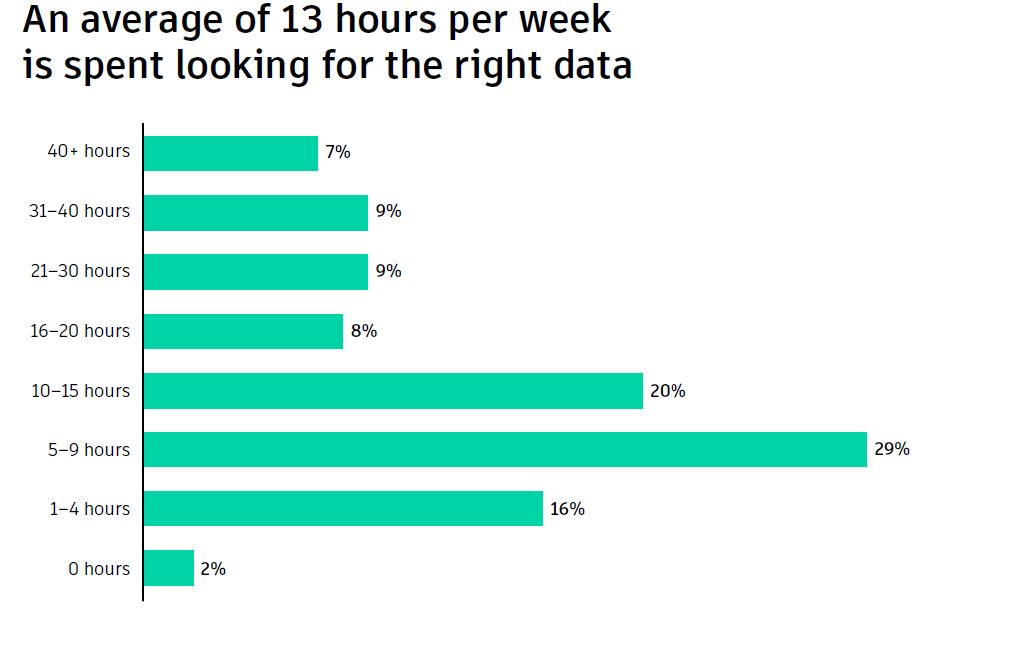
The water industry is not short of data. The challenge lies in organising and using it effectively. Many utilities operate hundreds of disconnected systems, making it difficult to determine which data is accurate or up to date. According to Autodesk’s research, professionals spend an average of 13 hours per week simply searching for or manipulating data. i)
Digital twin platforms address this fragmentation with a connected data environment. By standardising data formats and integrating information from across the asset lifecycle – from design and construction to operation and maintenance – utilities can build a single source of truth for asset information.
This has profound implications for maintenance and investment planning. Rather than reacting to failures, utilities can identify vulnerabilities before they become critical. They can test different scenarios, such as adding storage capacity or rerouting flows, and determine the most cost-effective approach.
For example, sustainable urban drainage systems (SuDS) are increasingly being used to remove rainwater from combined networks, reducing pressure on infrastructure while creating green spaces. Digital twins allow planners to model how these interventions will perform under varying conditions, ensuring that investments deliver long-term value.
“We have a wealth of data in this industry,” Novak notes. “The real challenge is connecting it and putting it to work in a meaningful way. Digital twins give us the framework to do that.”
Designing for Resilience
Digital twins also play a critical role in reducing risk during the design phase of new infrastructure. By combining 1D and 2D hydraulic modeling, solutions like InfoWorks ICM enable engineers to understand how water moves through both networks and the wider landscape.
This is particularly important for flood management. Traditional flood maps are often based on historical data, which may no longer reflect current realities. With a digital twin, engineers can simulate any storm scenario, regardless of whether it has occurred before, and assess its impact across a catchment.
This capability is already proving essential in regions prone to extreme weather. In countries like Spain, where catastrophic flooding has become more frequent, advanced modeling is helping authorities plan more effective responses and mitigate risk.
“Being able to simulate different scenarios before they happen is critical,” says Novak. “It allows authorities to move from reactive responses to proactive planning.”
Case Study: Europe’s first smart canal in Glasgow
A leading example of digital twin innovation in action is Scottish Canals’ Smart Canal in Glasgow -Europe’s first digitally controlled canal system. ii)
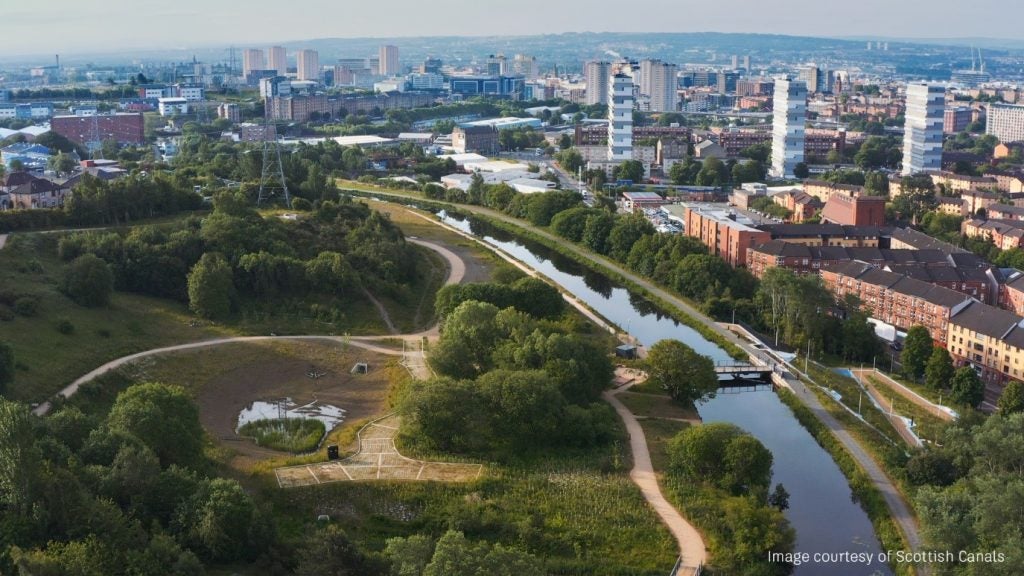
Faced with significant flood risk in an urban regeneration area, Scottish Canals implemented a digital twin solution using Autodesk InfoWorks ICM and ICM Live. By integrating real-time weather forecasts and sensor data, the system can predict incoming rainfall and proactively lower canal water levels to create temporary storage capacity. Crucially, the system operates in real time, continuously adjusting to changing conditions.
Digital tools also unlocked additional benefits beyond flood risk reduction. The area along the river was converted into parkland using SuDS and nature-based solutions to allow rainwater to be absorbed. A high value area for the community was created along with 270 hectares for new homes.
This innovative solution cost the city about 75% less than traditional concrete-based drainage, and repurposing existing canal infrastructure saved about 5,000 tons of capital carbon. The smart canal demonstrates how digital twins can transform water infrastructure into an active system, boosting resilience and economic growth.
A global shift in mindset
While the UK and Europe grapple with modernising legacy systems, other regions are taking a different approach. In the Middle East, large-scale developments are being designed with digital twins from the outset. Countries like Saudi Arabia and the UAE are investing heavily in master-planned systems, with wastewater, stormwater, potable water and irrigation networks designed to maximise efficiency and scale for population growth.
These greenfield projects highlight what is possible when digital thinking is embedded from the beginning.
“In places where infrastructure is being built from scratch, digital twins are part of the foundation,” Novak explains. “In more established regions, it’s about evolving what already exists and making it smarter.”
Building the foundations for change
Adopting digital twin technology requires collaboration across multiple stakeholders. Utilities must first establish a clear understanding of their asset base: what exists, where it is located, how old it is, and what condition it is in. This involves integrating GIS data, operational insights, and historical records into a unified model.
From there, real-time data, such as flow rates, pressure, and rainfall, can be layered in to create a dynamic system. Contractors and field teams also play a critical role, capturing accurate data during construction and maintenance to ensure that models remain up to date.
Importantly, this transformation is not just technological, it is cultural. A new generation of digitally native professionals is entering the workforce, bringing expectations of real-time data, mobile tools, and immersive technologies like 3D modeling and reality capture.
Their influence is accelerating the shift toward more agile, data-driven approaches.
The road ahead
The water sector stands at a crossroads. Continuing with reactive, fragmented approaches will not solve current challenges, from environmental degradation to supply shortages. By contrast, embracing digital twins and connected data platforms offers a path toward more resilient, sustainable systems.
The tools and technologies already exist. The question is no longer whether the industry can make this transition but how quickly it can do so.
As Novak concludes: “We have the technology, we have the data, and we understand the challenges. Now it’s about bringing it all together to build water systems that are fit for the future.”
Caryn Novak

Caryn Novak is a Senior Principal with Autodesk’s Business Consulting practice. She is a Civil and Environmental Engineer with 15 years of experience in the UK water sector in asset planning, operations, and regulation. Prior to joining the water industry, she worked for 15 years in data networking to deploy internet connectivity globally. Throughout her career, Caryn has advocated for the adoption of digitalization. She joined Autodesk in 2022 to help water utilities use data to transform how critical water infrastructure is managed.
Caryn has a BSE in Civil and Environmental Engineering from Duke University and a MSc in Water and Environmental Engineering from the University of Surrey. She has participated in research with environment agencies in the Great Lakes and Scotland, building predictive models for water quality and public health.
Sources:
i) https://construction.autodesk.com/go/design-and-make-construction-spotlight-report/
ii) https://www.autodesk.com/design-make/videos/scottish-canals
