

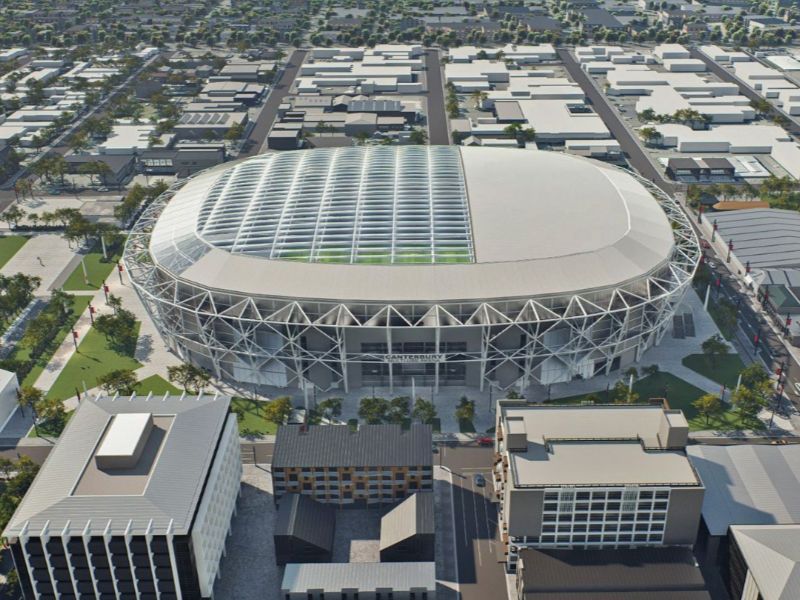
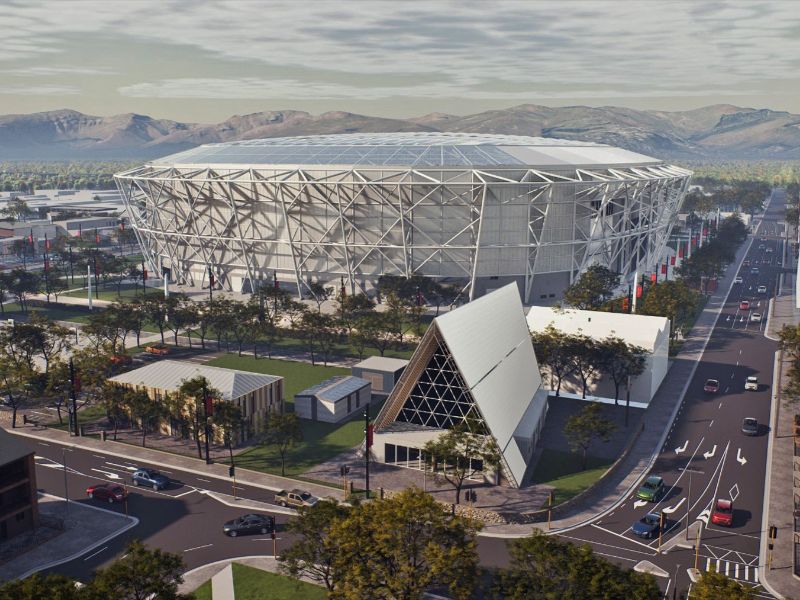
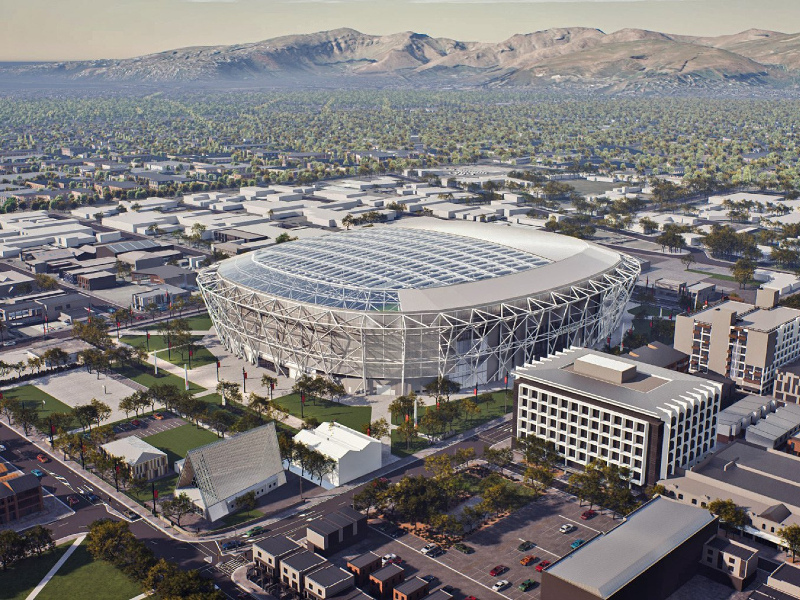
The One New Zealand Stadium at Te Kaha is a state-of-the-art arena located in Christchurch City in Canterbury, New Zealand. It is one of only two fully roofed stadiums in the world, with a natural turf pitch.
Also known as the Canterbury multi-use arena, it is designed to host matches of the All Blacks rugby team, Football World Cup qualifiers, and other international sports events and major concerts.
Recommended Buyers Guides

The Christchurch City Council, which owns the new arena, approved the preliminary designs for the project in January 2022, while the sod-turning ceremony for the project took place in April 2022.
Pre-construction works began in July 2022 and the first concrete pour took place in January 2023. The project involved an investment of NZ$683m ($418.75m). Around 4,000 people worked on the project during construction.
The stadium opened in March 2026 and was officially handed over to operator Venues Ōtautahi in April 2026.
The multi-purpose arena re-established Christchurch as a sporting and cultural capital and boosted the local economy.
Location
The One New Zealand Stadium at Te Kaha is situated on a 6.8-hectare (ha) –16.8 acres – site within the Te Kaharoa precinct in central Christchurch. It is bounded by Madras, Barbadoes, Hereford and Tuam streets. The arena is located six minutes from Christchurch Bus Interchange.
One New Zealand Stadium at Te Kaha details
The One New Zealand Stadium at Te Kaha is 232m (761.15ft) long, 195m wide and 47m high.
The multi-use arena has a seating capacity of 30,000, including 25,000 permanent and 5,000 temporary seats, for sports events and at least 37,000 for concerts. It provides a scalable seating capacity, making it flexible to accommodate smaller concerts, shows and events.
The arena also includes four player changing rooms; 23 corporate suites each with a capacity of 20–60 guests on level 2 of the west stand; 80 open corporate reserve seated areas; two function lounges covering a total area of 1,150m²; and 32 food and beverage outlets, which can serve 25,000 patrons.
Level 1 of the west stand houses the Ōtautahi Lounge, which offers comfortable seating in the bowl and a premium food and beverage offering for up to 892 guests. The lounge features a 514m2 terrace.
The stadium also offers 104 Premium Reserves, which range from eight to 14 seats with in-seat food and beverage delivery.
The One NZ Field Club, covering an area of 1,000m2, is situated on the field of play at the Hereford Street end of the stadium with a 400 guest capacity. The Platform Club, located on the north-west end of the stadium, can accommodate 68 guests.
Design details of Te Kaha Arena
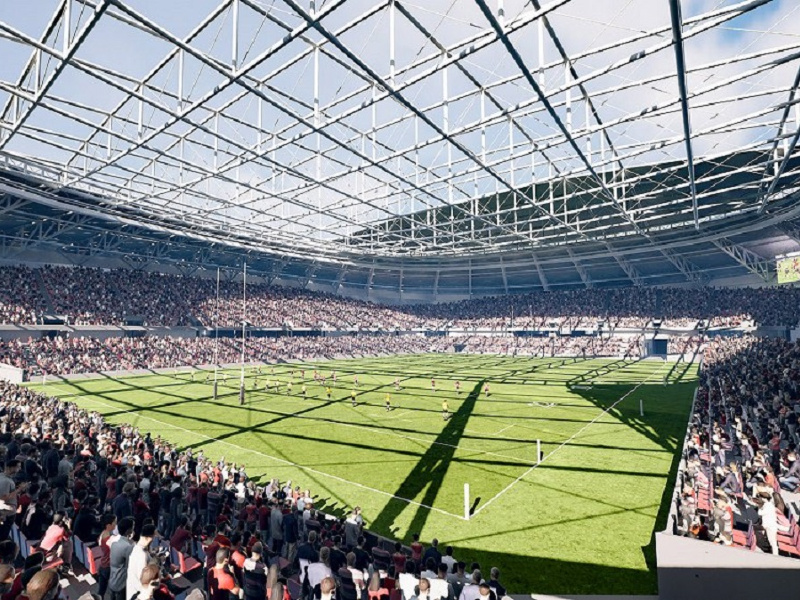
The arena includes a rectangular, permanently stitched, in-situ turf field of play and a fully covered roof.
It has been designed considering seismic requirements of the region and to improve fan experience, multi-use functionality and health of the turf. The design is also focused on maximising sunlight and reducing the noise impact on the properties in the surrounding area.
The arena is covered by a 175m × 210m ethylene tetrafluoroethylene (ETFE) roof, formed by over 80 steel modules, 61 ETFE cushions and nine single-skin ETFE cassettes.
The lightweight roof structure is free-standing and independent of the arena structure. An Oculus-style roof was adopted to increase its strength. The design considered the dome shape to offer extra rigidity to the stadium’s roof diaphragm.
Materials used
The project used 16,400t of steel, 5km of air-conditioning ducting, 1,100 panes of glass, 22,000 sheets of drywall and 11,500m2 of steel sheeting during the construction.
The average seating bowl angle of the arena is 33.5 degrees, while the distance between the field of play and the closest seats is 6m to maximise visitor experience.
The venue has large roller doors at the northern side to provide easy access to concert and festival crews to a large concert staging area, which is used to hold 5,000 temporary seats when not in use for musical performances. The staging area is located at one end of the arena to reduce damage to the turf during concerts and festivals.
A series of non-tensioned PVC smoke baffles were installed to meet the arena’s fire-engineering requirements.
The arena is also designed to provide an enhanced user experience for people with disabilities.
Sustainability features
One New Zealand Stadium’s design incorporates 20,000m2 of greenery with 13,000 plants across the site to minimise environmental impact. It functions as an all-electric venue with no gas on site.
These sustainable features are part of Venues Otautahi’s target of carbon neutrality across all its venues by 2030.
Contractors involved
The Kōtui consortium, led by BESIX Watpac, an Australian construction company, was contracted to deliver the Te Kaha arena in March 2021.
The consortium also included New Zealand-based construction companies Southbase Construction and Fulton Hogan, local seismic engineering specialists Lewis Bradford, and architecture and design services companies Populous and Warren and Mahoney Architects.
Mott MacDonald, a UK-based company, provided engineering services for the project.
Benmax, an Australian company, was awarded a contract to provide heating, ventilation and air conditioning mechanical services for the project in August 2022.
Robert Bird Group (RBG), an engineering consultant, was selected by BESIX Watpac to provide design concept verification services. RBG worked along with Vickery Hyett Sports Architecture, an architecture practice, and ME Engineers, a mechanical, electrical, and plumbing engineering services provider.
RBG also delivered construction engineering services during the pre-construction services agreement phase.
RCP, a project management services provider, was selected by Christchurch City Council to provide project and design management and contract administration services under the pre-contract services agreement.
Golder, an earth sciences and environmental consulting company; Holmes Fire, a fire engineering solutions provider; and WT Partnership, a construction cost management and advisory services company, are also involved in the project.
Connect Group, Tensys, Graham Surveying, Fabritecture and Powell Fenwick, as well as Abley Group and Inovo are some of the other contractors involved in the One New Zealand Stadium at Te Kaha project.
