The latest data shows that the US construction market is moving away from the fast growth seen after the pandemic and entering a more selective phase of expansion, where stronger activity in infrastructure, energy, and data centre projects is helping to balance weaker performance in several commercial real estate segments. As reported by the US Census Bureau, the total value of construction put in place, on a non-seasonally adjusted basis, increased by 1.3% year-on-year (YoY) in March 2026, after recording marginal YoY declines of 0.2% in February and 0.3% YoY in January 2026. Overall, the average value of construction put in place rose marginally by 0.3% YoY during the first three months of 2026. Looking at the key segments, residential building activity grew marginally by 0.8% YoY, while non-residential building activity decreased marginally by 0.1% YoY over the same period.

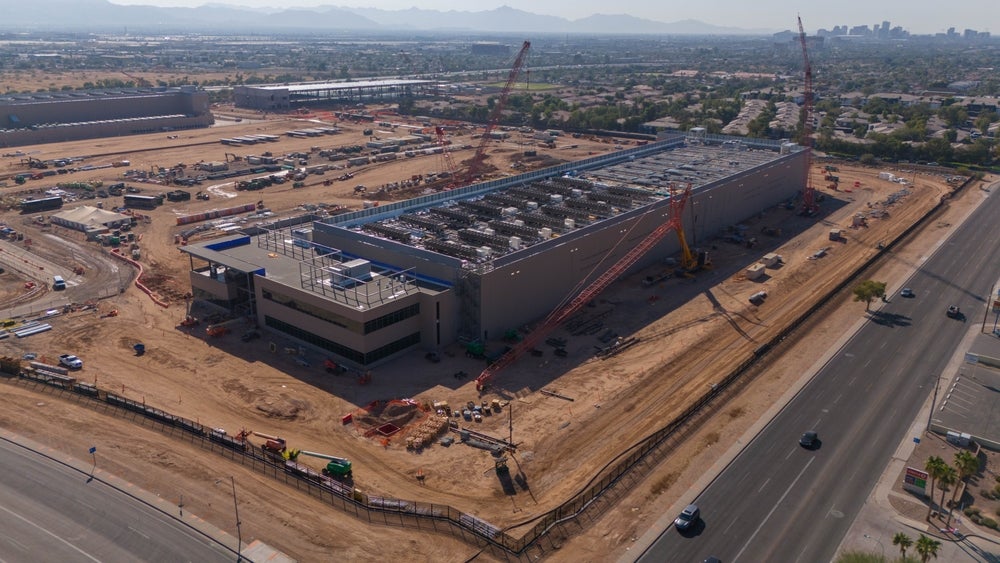
Strong demand from artificial intelligence and cloud computing is driving higher growth in the data centre segment, which is also influencing overall non-residential construction growth. The latest data from the US Census Bureau indicates that private sector spending on data centres has increased sharply over recent years. Average data centre spending grew by 32% in 2025, rising from $31.1bn in 2024 to $41bn. Data centre construction has almost quadrupled over the last four years, increasing from $9.9bn in 2021 to $41bn. Although data centre spending accounted for only 1.9% of total construction spending and 3.3% of non-residential construction in 2025, it is the main sector driving growth. Excluding data centre spending, non-residential construction recorded a contraction of 1% and overall construction a growth of 0.7% in March 2026. Based on the project pipeline tracked by GlobalData, as of early April 2026, there were 681 data centre projects (above $25 million) in the national pipeline with a combined planned expenditure of $1.5trn. Out of these, 395 projects worth $1trn remain in the pre-planning or planning stages, while 286 projects worth $467.4bn are currently in the pre-execution and execution stages. However, according to a latest report by GlobalData,  data centres are leading to high pressure on power grids, increasing energy costs, and straining local infrastructure, thereby several states are proposing legislation to ban development, with Maine expected to be the first to enact a moratorium.

Access deeper industry intelligence

Experience unmatched clarity with a single platform that combines unique data, AI, and human expertise.

Find out more

In month-on-month (MoM) terms, conditions appear to be improving in March 2026 compared with February 2026, mainly because the residential sector has returned to growth while the non-residential sector is also providing additional support through data centres. The residential construction sector regained momentum in March 2026, helped by stronger single-family and multi-family housing activity and by ongoing housing shortages in major metropolitan markets, which are fuelling construction activity in the sector. Government-backed housing incentives, housing demand driven by demographic trends, and better builder activity continued to support the sector, even though mortgage rates are still above historical averages. According to the Federal Reserve, in February 2026, consumer credit increased at a seasonally adjusted annual rate of 2.2%, compared to 1.8% in January 2026. However, wider housing expansion remains limited due to affordability challenges, higher labour costs, and increasing construction material prices. Recent US Census Bureau and Commerce Department releases also show that total permit activity has weakened, which suggests that developers are still cautious about starting new projects because of financing risks and slower rent growth in some urban markets. According to the US Census Bureau, the total number of new privately-owned residential building permits authorised in the country declined by 2.3% YoY in the first three months of 2026, following an annual decline of 4.1% in 2025.

Non-residential construction activity remained comparatively mixed across the market. Total non-residential spending fell marginally in March 2026, as several sectors, including commercial, manufacturing, and certain retail developments, continued to face subdued investment conditions. Nevertheless, technology-linked construction continues to provide a major growth pillar for the US market and is supporting activity levels even as other categories slow. Federal infrastructure legislation and state-level capital programs have sustained investment in power, healthcare, and tourism-related infrastructure, which has helped maintain a steady pipeline of non-residential work. In addition, state and local governments remain active in healthcare modernization, sewage treatment systems, and utility upgrades, and this public-sector activity is helping to offset cyclical weakness in commercial construction. A major structural trend shaping the US construction market is the rapid expansion of data-centre infrastructure linked to artificial intelligence and cloud computing investments. The technology firms continue to allocate billions of dollars toward hyperscale data centres, which is creating sustained demand for specialised industrial and power-intensive construction with complex electrical and mechanical requirements. As a result, this segment has become one of the few high-growth commercial categories amid broader non-residential moderation. On the negative side, the manufacturing sector, along with the transportation sector, is facing decline, owing to the recent tariff implementation and worsening labour shortages that are restraining manufacturing growth and limiting project momentum. According to the preliminary estimates of the US Bureau of Labor Statistics (BLS), employment in the manufacturing industry fell marginally by 0.5% YoY in March 2026, decreasing from 12.7 million at the end of March 2025 to 12.6 million one year later in March 2026. Meanwhile, the average manufacturing employment fell marginally by 0.6% YoY in the first three months of 2026.

The US construction industry shows a clearly bifurcated market structure, with different sectors moving at different speeds driven by different demand factors. Residential construction is slowly improving compared with the recent period, but it is still limited by affordability challenges such as high home prices and borrowing costs, which continue to restrict the pace of recovery. At the same time, non-residential construction growth is becoming more focused in specific areas, especially public infrastructure and technology-led developments, rather than being evenly spread across all commercial segments. Overall, the medium-term outlook for the sector remains moderately positive, with stronger potential in infrastructure programmes, advanced energy transition initiatives, and data-centre construction. Even so, the ability to deliver projects on time and within budget will continue to depend heavily on financing conditions and the availability of skilled labour, both of which remain key risks. Contractors are still dealing with persistent labour shortages, ongoing supply-chain volatility, and tariff-related cost pressures on steel, aluminium, and electrical equipment. These combined constraints are extending project timelines and adding cost and profitability pressure across the wider construction sector.