
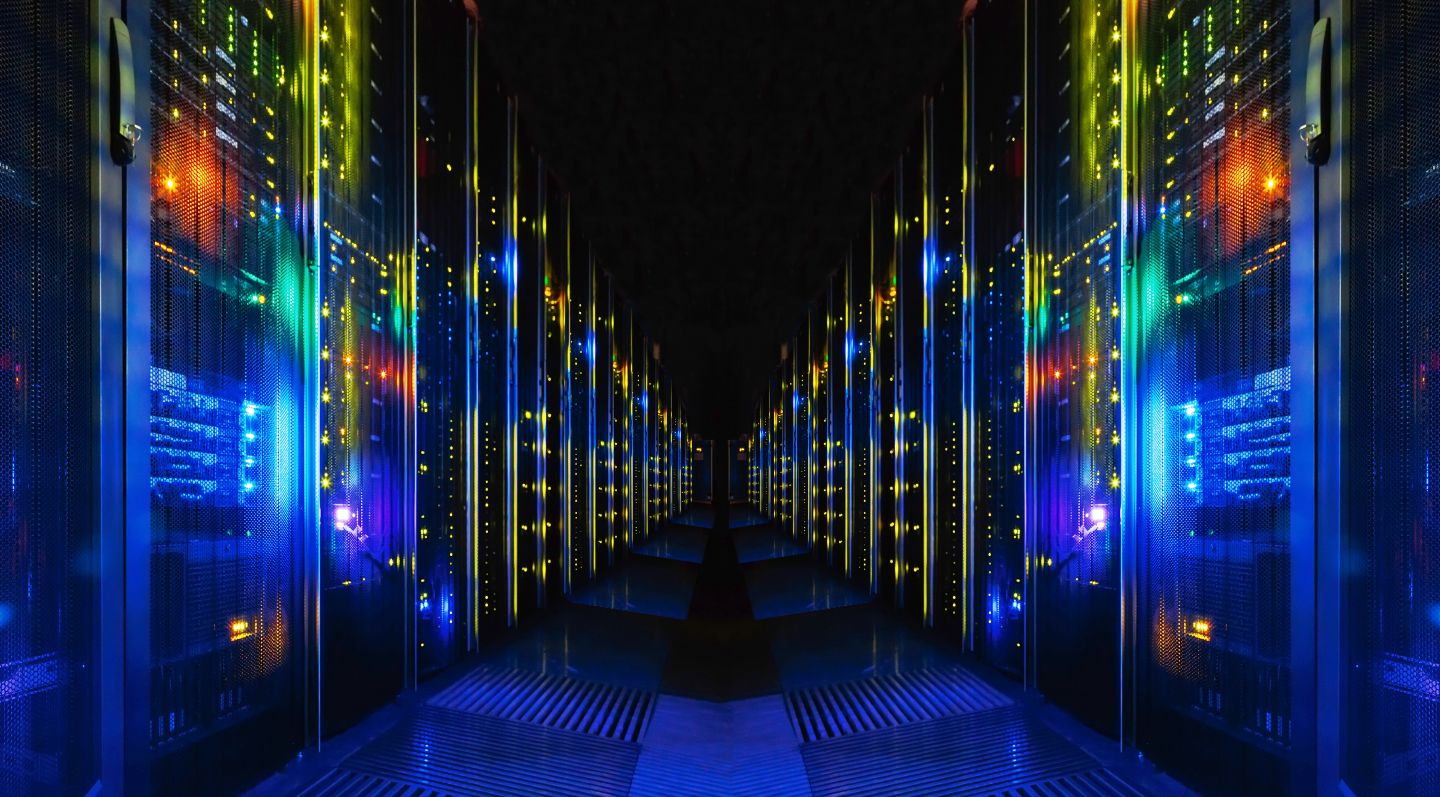
The rise of cloud computing and AI has triggered demand for data centres across the US. As these server hubs process and store data, they require massive amounts of water and electricity to operate and cool the equipment. However, data centres’ demand for power is straining the electrical grid in some places and spurring the development of fossil fuel power plants in others, thereby sparking environmental concerns. The AI boom is leading to a rise in electricity demand at a time when the country is already witnessing a rise in electricity prices, driven by inflation. These concerns are leading to increased opposition to data centre development across the country. According to the US Energy Information Administration (EIA), net electricity generation in the US grew by 2.8% in 2025, from 4,308.6TWh in 2024 to 4,429.5TWh. Net generation is related to electricity demand; according to the EIA, the commercial sector, which is a key driver of this growth, saw electricity demand rise by 2.9% in 2025. Net generation in the commercial sector (which includes data centres) grew from 15.3TWh in 2024 to 15.9TWh in 2025; this was preceded by annual falls of 5% in 2024 and 4% in 2023.
The US: net electricity generation (TWh)

Latest data from the US Census Bureau suggests that private sector spending on data centres has been on a sharp rise. Private sector spending on data centre construction increased at a seasonally adjusted annual rate of 2.3% month-on-month (MoM) in January 2026, to $47bn. Meanwhile, the average spending recorded a growth of 32% in 2025, from $31.1bn in 2024 to $41bn. In fact, construction of data centres has almost quadrupled in the last four years, increasing from $9.9bn in 2021 to $41bn. Meanwhile, according to the pipeline of projects tracked by GlobalData, as of early April 2026, there were 681 data centre projects (above $25m) in the pipeline in the country, with a collective planned expenditure of $1.5trn. Of the total, 395 projects – worth $1trn – are still in the pre-planning or planning stages, while 286 projects worth $467.4bn are in the pre-execution and execution stages.
Access deeper industry intelligence
Experience unmatched clarity with a single platform that combines unique data, AI, and human expertise.
The US: value of private construction put in place for data centres, seasonally adjusted annual rate ($ million)

However, the growing demand for data centres is raising multiple concerns, with residents and lawmakers claiming that the data centres are putting pressure on power grids, increasing energy costs, and straining local infrastructure. Additionally, some communities have also raised concerns over water usage and environmental impact. Corporations such as Google, Microsoft, Amazon and Meta are facing growing resistance across the US, as more states are pushing back against large data centre projects.
Since late 2025, at least 11 American states – Georgia, Maryland, Michigan, New Hampshire, New York, Oklahoma, South Carolina, South Dakota, Vermont, Virginia and Wisconsin – have proposed legislation to restrict or ban data centre development. In early April 2026, the Maine House of Representatives gave its initial approval to a bill that would ban the construction of most data centres until November 2027. The bill (LD 307) – which places a moratorium on data centres with a load of 20MW or more – was passed by a vote of 82-62, thereby advancing it to the Senate. The house has given an initial approval to another bill (LD 713) that would exclude data centres from certain tax breaks under the ‘Business Equipment Tax Exemption Program’ and the ‘Dirigo Business Incentives Programs’. This bill was passed by a vote of 75-61 and has now advanced to the Senate.
In addition to Maine, states like New York, South Carolina, Oklahoma and Ohio are also considering similar restrictions. The New York State Senate proposed a bill in February 2026, which would pause new data centre permits for three years, covering construction, siting, and commencement of operations of data centres capable of using 20MW or more of electricity. Although the bill does not revoke previously issued permits, it is still applicable to any additional permits required for data centre projects that are already under construction but not yet completed and operational. The bill requires the Department of Environmental Conservation to complete a comprehensive environmental impact review on energy, water, emissions and waste. The legislation is considered a responsible pause, given that the state’s power grid is already under pressure due to a surge in consumption. New York has over 130 data centres statewide, with nearly 50% of them located in the New York City metropolitan area itself. As of January 2026, the New York Independent System Operator (NYISO) interconnection queue included 48 new large-load projects totalling over 11GW of demand. Of the 25 projects added to New York’s power grid interconnection queue this year, over half of them are data centres. Collectively, they are projected to add over 7GW of electricity usage by 2030, which is enough to power seven million homes. Even without additional data centre development, the state still faces the prospect of an energy emergency within the next decade, according to the NYISO.
Despite data centre moratorium bills being introduced in 11 states, as of early April 2026, none have successfully enacted a moratorium as lawmakers balance community concerns with economic development priorities. However, in contrast, local data centre moratoriums have gained more traction than the state-level efforts, with several municipalities and cities temporarily pausing new projects in response to constituent feedback. In August 2025, St Charles, Missouri, became one of the first cities in the nation to ban data centre construction for a year. Similarly, three counties in the state of Indiana have also suspended data centre developments. In March 2026, Fulton County, Indiana, has also issued a temporary ban on data centre construction that will be in effect for the next year, while DeKalb County, Georgia, has pushed off new developments through June 2026.
The US’s AI boom and development of data centres are facing another significant hurdle – the trade war. Despite President Donald Trump announcing in 2025 that the rapid construction of AI data centres was among his top priorities to ensure that the US wins the AI race against China, the US is heavily dependent on China for critical components that are needed to build data centres, particularly for the AI infrastructure. The trade war between China and the US is hampering the import of electrical equipment that is required to build the power infrastructure that every data centre needs. According to the US International Trade Commission, the imports of major electrical equipment have surged in recent years, coinciding with the rapid expansion of AI data centre projects. In some cases, delivery timelines for high-capacity transformers increased from 24-30 months before 2020 to as long as five years, reflecting both supply constraints and rising demand. The shortage of electrical equipment, such as transformers, switchgear and batteries, is likely to lead to the delay or cancellation of several data centre projects across the US.
