
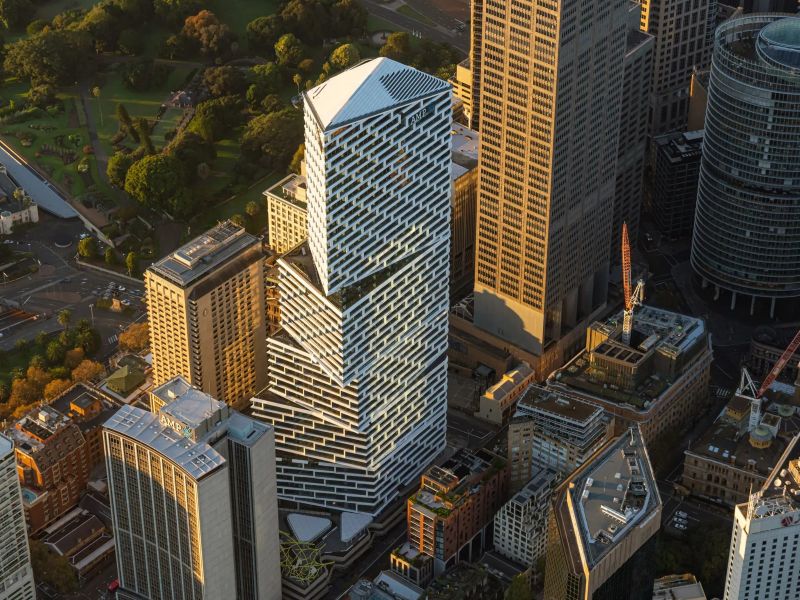
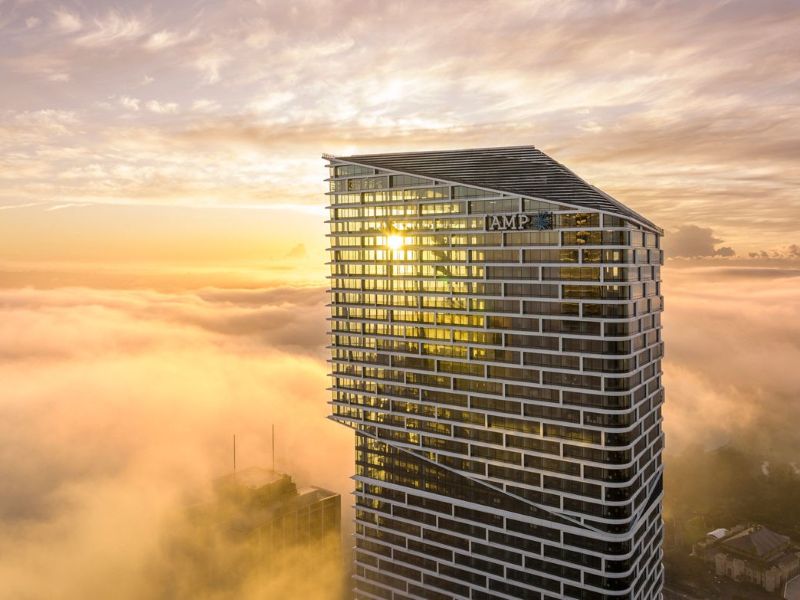
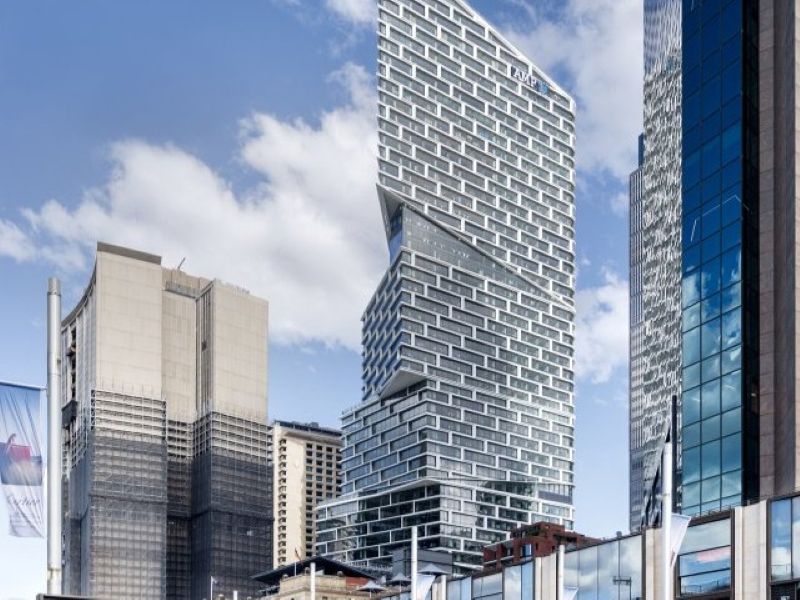
The Quay Quarter Tower is the world’s first fully upcycled skyscraper, developed by repurposing AMP Capital’s existing building named AMP Centre at 50 Bridge Street, Sydney, Australia.
The mixed-use building accommodates offices, shops, bars, restaurants, a museum and a new boutique hotel. It was developed with an estimated investment of A$660m ($509.6m).
Recommended Buyers Guides

AMP Capital Diversified Property Fund (ADPF) and AMP Capital Wholesale Office Fund (AWOF), now part of Dexus, were the initial developers of the project. Superannuation fund Rest acquired a one-third interest in the project for approximately A$900m ($692m) in April 2018.
Dexus manages the operations of the tower and is a key stakeholder and co-investor through Dexus Wholesale Property Fund (DWPF) alongside Mirvac, via the Mirvac Wholesale Office Fund (MWOF), and Rest.
The construction of the project commenced in April 2018 and was completed in April 2022. The project employed around 35,000 people during the four-year construction timeframe.
The tenants of the tower include AMP, Deloitte Australia, law firm Corrs Chambers Westgarth, global investment business EQT, Sia Partners, Johnson Winter & Slattery and The Work Project.
Quay Quarter Sydney master plan
The Quay Quarter Sydney project involved the redevelopment of two inner blocks of the iconic Circular Quay in the city. The two blocks include historic buildings such as the Hinchcliff House, 33 Alfred Street and 50 Bridge Street.
The project transformed the precinct into a mixed-use development featuring retail, cafes, dining and commercial office spaces, as well as luxury residential apartments. It addresses the shortage of premium office space in Sydney and improves the city’s competitiveness by attracting international organisations.
The development also created several public spaces, pedestrian walkways and revitalised the iconic Circular Quay into a gateway to Sydney.
Several prominent architects, including Carter Williamson (Hinchcliff House) and Johnson Pilton Walker (33 Alfred Street), were selected to redevelop the buildings and common spaces. SJB (15 Young Street), Silvester Fuller (18 Loftus Street) and MAKE Architecture (8 Loftus Street) were selected to design three residential buildings of the development.
The first residential building, 18 Loftus Street, includes 106 apartments built on a 4,300m² (46,284ft²) area. All three buildings are bordered by Young and Loftus Streets and located near Sydney Harbour.
Quay Quarter Tower design and features
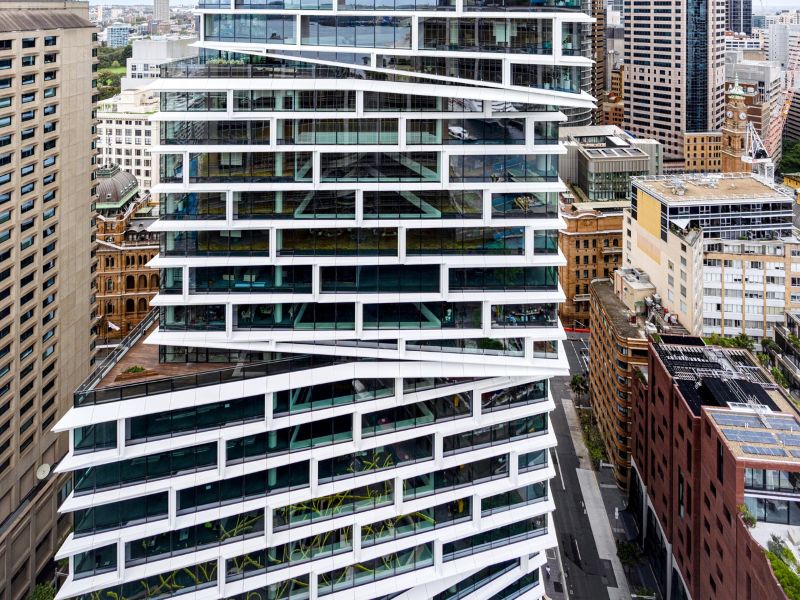
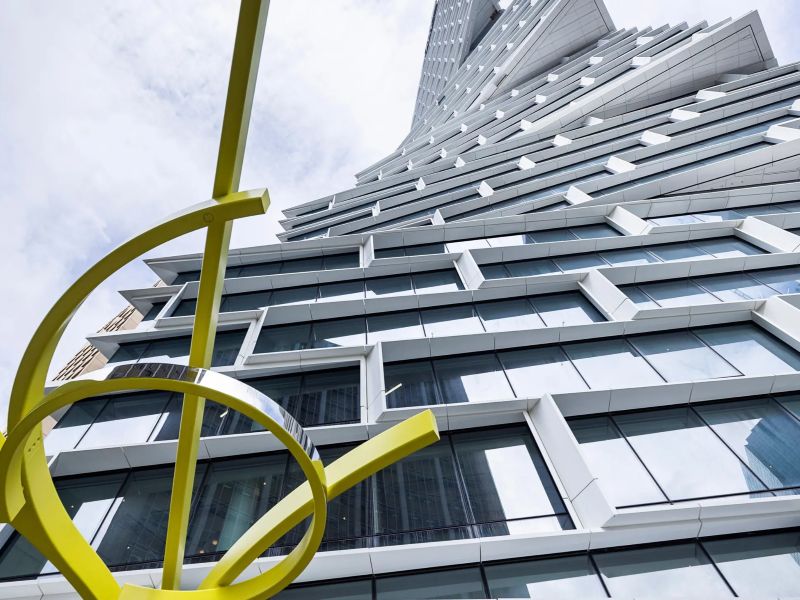
The Quay Quarter Tower is a 54-storey, 216m (708ft) high building. It comprises five series of shifting volumes made of glass stacked on top of each other. The separate volumes are based on campus-style developments, which use large vertical floorplates. The five vertical volumes together form 2,000m² of net floor area.
The building comprises 45,000m² of new construction, mostly on the north side, which increased the net lettable area (NLA) to 89,000m². The base of the tower includes a mixed-use podium featuring 4,000m² of retail and green spaces for the office workers and the general public.
A multi-level atrium flows throughout each volume, creating expansive and intimate social spaces that promote interaction among the building occupants.
The lower levels of the building are angled towards the west to take advantage of the energy and movement from the nearby neighbourhood. As the building rises, the remaining levels shift east providing splendid visions of the Opera House and Sydney Harbour. The rotation also acts as a sunshade, adding a sustainable feature to the project.
The rotation also created several external terraces linked to the common atria, which contain several amenities for the occupants. The common spaces provide stunning views of the Sydney skyline both vertically and horizontally while allowing sunlight into the building.
The project utilised Autodesk technology and digital construction workflows, including Autodesk Revit, Navisworks, and Autodesk BIM 360, for design and engineering. The structural behaviour was studied using a 4D structural model (digital twin in ETABS building analysis software).
Sustainable features of Quay Quarter Tower
Two-thirds of the existing building, including 66% of the building’s existing columns, beams, and slabs and 95% of its internal walls, was retained as part of the project’s sustainability features. Instead of demolishing the older building, the area was improved and recycled to create an urban office space with a new facade and elevator shafts.
The reuse of the existing building and grafts resulted in embodied carbon savings of 12,000 tonnes. The project also leveraged the electric arc furnace to reduce its environmental footprint.
The project includes new-generation refrigerant chillers to reduce CO₂ emissions, one acre of new private and public open space, and compostable-only packaging and organic waste collection in the retail podium.
Other sustainability features include rainwater harvesting, high-performance facade and external shading hoods, shaded outdoor areas, native plants, green roofs, smart systems, air-quality systems, and solar arrays across the lanes, and permeable surfaces.
The project has secured WELL, Green Star Office Design v3 (6 Star rated), Green Star Interiors (6 Star rated) and NABERS Office Energy Rating, Base Building (5.5 Star rated).
Awards
The Quay Quarter Tower project secured the 2024 Property Council of Australia Innovation and Excellence Award for Best Sustainable Development. The project was selected as a 2025 finalist for The Earthshot Prize, a global environmental prize.
Additionally, the project secured 2023 CTBUH Awards in various categories. The project won 2023 AIA NSW Architecture Awards: Lord Mayor’s Prize and Commercial Architecture Awards.
Other achievements include 2023 International Architecture Awards – High Rises/Skyscrapers; 2023 UDIA NSW & Coronation Property Awards for Excellence – Winner of Urban Renewal; 2022 World Architecture Festival Award – World Building of the Year; 2022 WAN Awards: Tall Buildings – Gold; and 2022 International High-Rise Award.
The project also won the Elevator World Modernization/Project of the Year award for 2022/23.
Contractors involved
AMP Capital selected Multiplex in April 2018 to construct the mixed-use project. Slabtec, a Dywidag company, performed critical structural strengthening for the project.
Danish architect 3XN is the project designer. Arup and BG&E, a part of SYSTRA, provided engineering services.
Design Research Studio was selected to design the interior spaces of the building, including the reception, meeting and conference facilities.
BVN was appointed as the executive architect on the project, while JPW 33 advised AMP Capital regarding the refurbishment of 33 Alfred Street tower.
Hassell and Foster + Partners provided interior workplace design alongside Freestate and Digital Workplace Company.
ASPECT Studios served as the landscape architect, and the Schindler Group provided the vertical transportation system.
CPP Wind carried out wind and structural engineering studies for the project. Sculptform provided interior and architectural timber features.
Schindler installed 24 Schindler 7000 elevators at the tower. Group DLA designed and delivered compliance and regulatory project work for the premium corporate workplace fitout spanning four levels inside the tower.
Essence, Top Knot Carpentry & Joinery, Innovis, ADG, Climatech Group, as part of the Equilibrium & Climatech JV (ECJV partnership), KUSCH, and DisplaySweet are other contractors involved in the project.
Suppliers involved in the project are ASP Access Floors, Boral and its concrete-placing subsidiary, De Martin & Gasparini (DMG), Classic Architectural Group, CE Construction Solutions, and Sculptform.
