

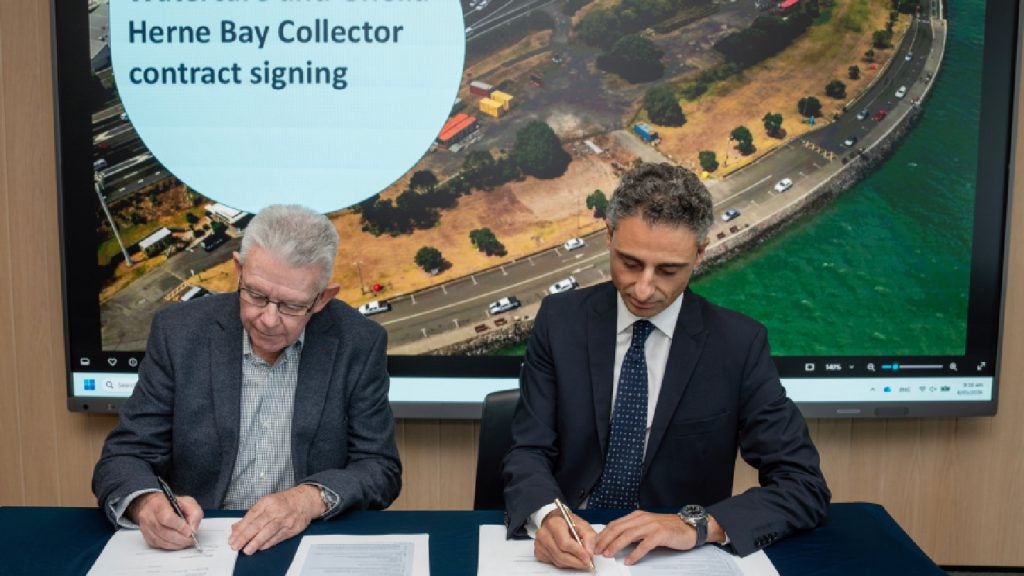
Construction group Ghella has signed a contract with Watercare for the design and construction of the Herne Bay Collector Tunnel in Auckland, New Zealand.
The latest agreement marks the start of the project’s main delivery phase, with completion scheduled for the end of 2028.
The tunnel, measuring approximately 1.7km in length and 2.1m in diameter, will be constructed beneath local streets at depths ranging from 9m to 22m.
The micro tunnel boring machine (TBM), previously utilised on the Central Interceptor link sewers, will be deployed for this project, with experienced personnel from that programme transitioning to the new works.
The Herne Bay Collector Tunnel aims to collect combined wastewater and stormwater overflows for treatment at the Māngere Wastewater Treatment Plant.
Project works began last year with detailed design activities and service location investigations.
This year, Ghella has started early enabling works, including service relocations and preparations along the construction corridor, in advance of the main tunnel excavation and shaft construction.
The scope of the project includes the installation of seven main shafts, three intermediate shafts, and overflow connections to existing engineered overflow points.
A control chamber will be constructed at Point Erin Park to integrate the new tunnel with the Central Interceptor system as part of Auckland's broader wastewater infrastructure.
Additional pipelines of varying diameters will be laid along Marine Parade and local streets, with several temporary construction support areas established at points such as the Curran Street motorway on-ramp, Point Erin Park and Salisbury Reserve.
Construction sites are located mainly at intersections in the Sarsfield, Wallace and Argyle Street areas, where service relocations and alterations to traffic management are under way.
Further work at Point Erin Park includes the relocation of power, streetlights, fibre, and communication lines, as well as wastewater and water pipes, in preparation for the establishment of the main control chamber and plant room.
The project is proceeding in a densely populated waterfront area with limited street access and challenging site conditions, requiring ongoing coordination to maintain safety and minimise disruption.
Once operational, the tunnel is expected to reduce overflows into the Waitematā Harbour, contributing to improvements in water quality in the Herne Bay area.
Ghella director Rosario Barresi said: “Working with Watercare has been, and will continue to be, a cornerstone of our long-term commitment in New Zealand, a country where Ghella feels at home.”