
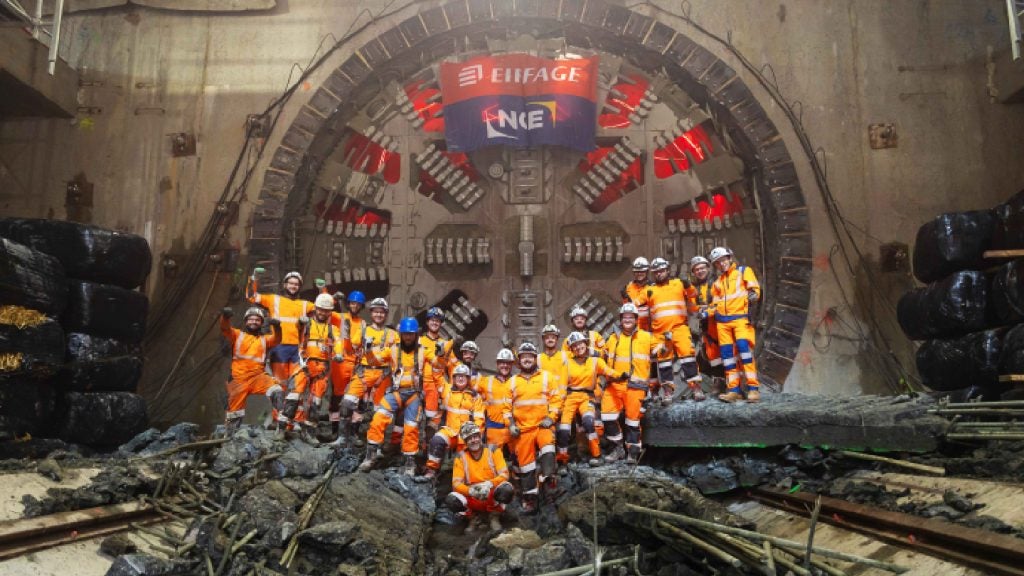
Eiffage announced that construction of the new Toulouse Metro C line in France has reached a significant point, as the tunnel boring machine (TBM) named Lise Enjalbert completed its second breakthrough at the future Blagnac station.
This progress follows the first breakthrough, 950m excavated between Ponts Jumeaux and Sept Deniers Stade Toulousain Station, which was previously marked by an event with the Stade Toulousain Rugby’s "Red and Black Club."
More than 2,000m of the planned 4,136m tunnel have been excavated since work began at Ponts Jumeaux, according to the consortium managing the project.
The consortium responsible consists of Eiffage Génie Civil (lead partner) and NGE - BTP, with project management by Tisséo Ingénierie and Tisséo Collectivités.
The tunnel boring teams are now preparing for the final stage at Puits Laporte, where the machine will emerge from the ground.
The new phase follows what the consortium described as a “crucial milestone” in excavating beneath the city.
Toulouse’s Metro C line forms part of a broader effort to expand public transport options in the metropolitan area.
The development aims to provide a new 27km underground metro line with 21 stations, including five that will connect with existing railway services.
Once completed, the line is expected to serve around 200,000 passengers daily, linking major economic, urban and residential sectors from Labège to Colomiers, and providing access to Toulouse-Blagnac Airport through other connecting lines.
The construction process uses a TBM to build the tunnel and install fibre-reinforced concrete segments, a method the consortium reports will reduce steel usage across 95% of the structure. A new manufacturing facility will produce these concrete segments locally.
In addition, the builders have stated that the project is designed to mitigate environmental impact by using mostly renewable energy, clean vehicles and eco-friendly installations, and they plan to recover more than 80% of the excavated material.
According to information provided by the consortium, approximately 80% of the new line will run underground.
The Metro C extension is expected to support the city’s environmental goals, aiming to shift daily commuters away from private cars and reduce annual CO2 emissions by 28,700t.
Construction on the project began in spring 2023. The consortium anticipates completion of the main works by summer 2027, followed by a final year dedicated to installing operational equipment.