
Modular construction could be the next stage in wildfire rescue and response. The need for quick, cost-effective disaster response is growing as wildfires become more destructive and frequent.
Wildfires have grown in size and severity in recent years due to climate change and urban development. Research led by the University of Tasmania in 2024 found that the frequency of extreme wildfire events had more than doubled between 2003 and 2023. Between 2016 and 2023, extreme fire activity increased sixfold, suggesting this trend will only worsen.
Go deeper with GlobalData


Discover B2B Marketing That Performs
Combine business intelligence and editorial excellence to reach engaged professionals across 36 leading media platforms.
Wildfire risk is linked to several factors, including soil moisture and vegetation dryness. Drier conditions are becoming more common because of warmer temperatures and reduced rainfall. Urban development and urban sprawl are bringing populations and settlements closer to wildfire ignition sources, increasing risk.
Rescue and disaster relief efforts will need to ramp up as wildfires grow. Modular and prefabricated buildings can deliver quick, cost-effective relief in disasters. Emergency services like hospitals and evacuation centres can be deployed in response to wildfires and be flexibly designed to support any type and scale of fire.
Modular fire stations bring protection to remote areas
Modular construction can bring fire stations and response units to remote areas. Vehicle depots that support central fire stations can be set up at low cost and reduce response times to fire warnings. One example from Germany demonstrates the use of modular warehouses.
Herchenbach offers temporary warehouse buildings made of aluminium and steel that are 95% reusable and recyclable. In Germany’s Rhein-Sieg-Kreis, Herchenbach products supported volunteer firefighters in rural areas. In areas like Much in Rhein-Sieg-Kreis, ten-minute response times are required for emergency calls. Previously, one central hub in Much had an above-average response time rate.
The fire station expanded its outreach by deploying modular warehouses on the site of a recently cleared treatment plant. The new warehouse served as a small-scale volunteer fire station that supported the central hub. The team built the new depot in a handful of weeks using a prefabricated Herchenbach warehouse. Using ground-spike anchoring instead of poured concrete foundations meant the fire crew could erect the warehouse in two hours, rather than wait four weeks for the foundations to dry.
The volunteer station has helped reduce response times in the region and keep rural areas of Germany better connected to fire protection.
California architects are responding to climate change
Architecture firm Wittman Estes designed Fire Station 67 in 2024 in direct response to growing wildfire concerns in California. The firm installed it in Orange County, California, from ten prefabricated steel cubes that were driven to the site and placed with forklifts.
Wittman Estes designed the cubes for reuse, speed and resilience. The sturdy building was designed to deploy quickly and adapt to changing needs as California wildfires shift with climate variability. Sherer Architects suggests a typical fire station takes about two and a half years to design and construct, with construction typically taking up to 18 months. Wittman Estes’ use of modular construction drastically reduced construction time.
Using modular construction, the team built the fire station on site in a matter of months. Initial designs happened in June 2021. Fabrication began in March 2022, assembly started in September 2022, and construction was completed the following month, in October.
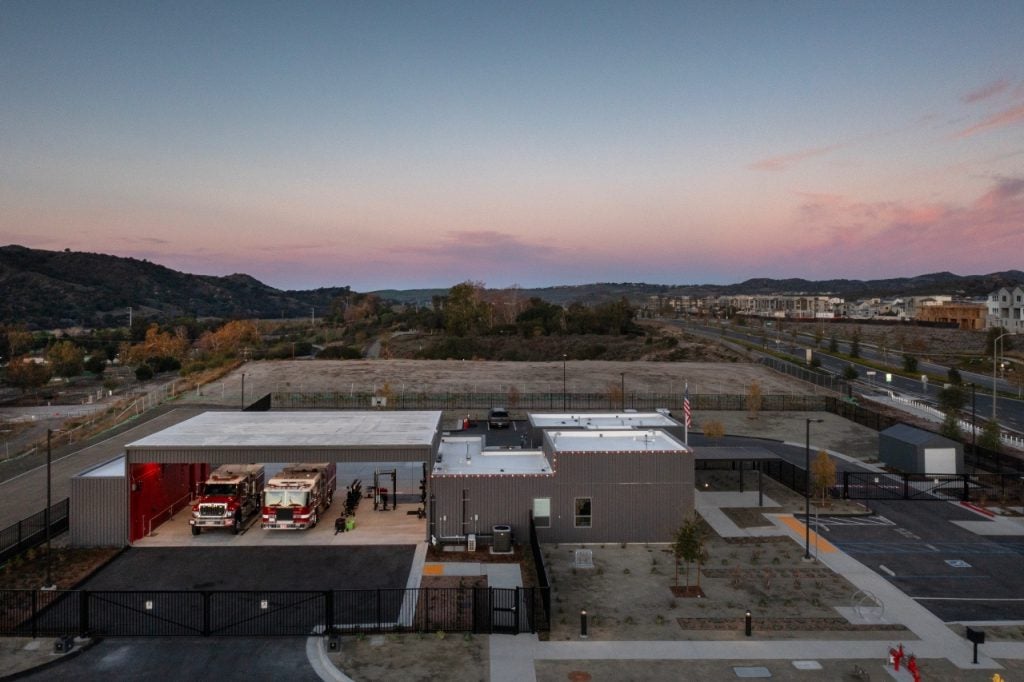
Now that the design for Fire Station 67 has been tested, Wittman Estes can replicate it for further deployment in California if needed. With the fire station assembly taking only a matter of weeks, Wittman Estes can fabricate parts for additional modular fire stations that can be stored and deployed when the next wildfire season rolls around in California. Modular design means Fire Station 67 could also be reused at a different location if needed.
Modular designs offer homes for those displaced
Modular designs aren’t limited to rescue efforts at fire stations. Modular construction can also provide temporary housing and privacy in evacuation shelters after wildfires.
In 2023, wildfires in Hawaii killed over 100 people and destroyed over 2,000 structures. Displaced families were housed in modular homes during the disaster. The Modular Building Institute advised Maui officials on using modular construction for wildfire disaster relief.
Mainland US factories built over 300 modular homes for displaced communities. Modular home manufacturer Fading West produced some of these homes, producing ten a week at its Colorado factories. A few weeks into the process, it contracted Guerdon Modular Buildings to complete further homes. Guerdon Modular Homes had its first shipment of homes to Hawai’i ready within two weeks.
The modular homes set for Maui arrived fully furnished, ready for immediate occupancy. This reduced the time displaced families had to wait to enter homes and provided fully functional units, reducing the stress of rebuilding their lives. The homes were built on temporary foundations so they can be easily relocated. They were also designed for longevity, as recovering from natural disasters can take years.
Modular construction to the rescue
As natural disasters like wildfires grow in size, frequency and severity, modular design and prefab construction can support rescue and emergency efforts. Prefabricated buildings offer rapid on-site assembly compared with traditional on-site construction. This means buildings, such as emergency fire stations or temporary accommodation, can be built in weeks, not years.
Modular designs are easily adaptable, reducing design times. Existing fire stations can inspire prefabricated parts. Estimates suggest modular designs can cut overall project timelines by up to 50% and reduce on-site construction from weeks to days. This rapid delivery makes modular design ideal for the growing need for disaster relief.
In the case of wildfires specifically, prefabricated fire stations can be quickly deployed, reducing construction time to a matter of weeks. Temporary warehouses can serve as vehicle outposts that reduce response times and connect rural areas with fire protection. Lastly, modular homes and temporary housing can provide long-term protection and stability for those displaced by wildfires, helping impacted populations return to a semblance of normalcy within weeks.


