

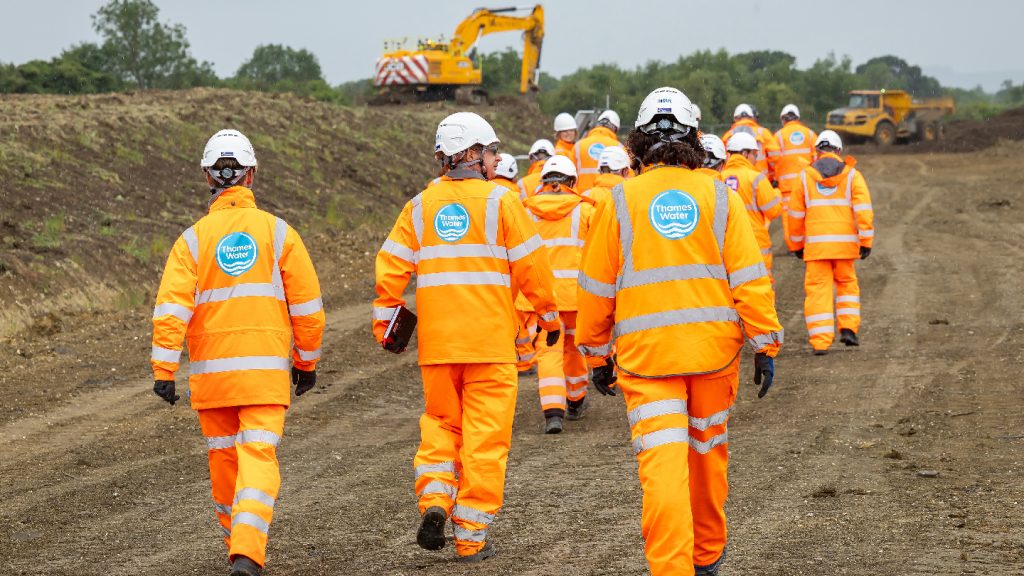
UK-based water and wastewater service provider Thames Water has issued a £5.7bn ($7.7bn) tender notice seeking a contractor to design, construct, test and commission its proposed White Horse Reservoir in Oxfordshire.
The planned facility, which would hold 150 billion litres of water, is intended to serve communities from Oxfordshire and Wiltshire through to Hampshire and London.
The project has met with significant local opposition, amid anger at the company's poor performance. In 2025, Thames Water was fined a record £122m by the UK regulator Ofwat for "inadequate" performance and unjustified dividends paid to shareholders.
Controversially, the new reservoir project will be paid for by Thames Water's customers, not private investors, further pushing up utilities bills in the south of England.
According to the company, the reservoir could provide up to 271 megalitres (ML) of water per day during drought conditions, supporting up to 15 million people across the South East through Thames Water, Southern Water and Affinity Water networks.
Southern Water major projects director Ben Ring said: “White Horse Reservoir is an essential part of our plan to keep taps and rivers flowing in Hampshire.
“Combined with our Thames to Southern Transfer pipeline, it would supply our customers with up to 120 million litres of water a day during a drought, meaning the same amount can be left in Hampshire’s rare and sensitive chalk stream rivers – the Test and the Itchen.”
The project forms part of a national plan that includes nine new reservoirs aimed at improving the UK’s water security.
Construction of the White Horse Reservoir is expected to generate approximately 1,800 jobs across various roles such as engineering, ecology, geoscience, archaeology and park management.
Thames Water has begun engaging with educational institutions and training providers to prepare a suitably skilled workforce for the project.
The company selected the name White Horse Reservoir in reference to local heritage, replacing the previous South East Strategic Reservoir Option (SESRO) designation.
In addition to its primary function as a water storage facility, the reservoir is set to feature visitor amenities including a centre and café, recreational lakes for sailing and paddleboarding, angling piers, educational spaces, and adventure areas.
Plans also include the development of habitats such as wildlife ponds, wetlands, woodlands and grasslands.
Thames Water CEO Chris Weston said: “Once built, it would be one of the largest in the country, providing water to millions, supporting new homes and development, and creating an exciting new destination where people can unwind and connect with nature.”
Thames Water states that feedback gathered through ongoing statutory consultation will inform its application for a Development Consent Order due for submission later this year.
If approved by government authorities, the reservoir is projected to begin supplying water from 2040.
An online briefing for potential applicants interested in participating in the Main Works Contract will take place on 11 February 2026.
Additional reporting by Richard Thomas.