
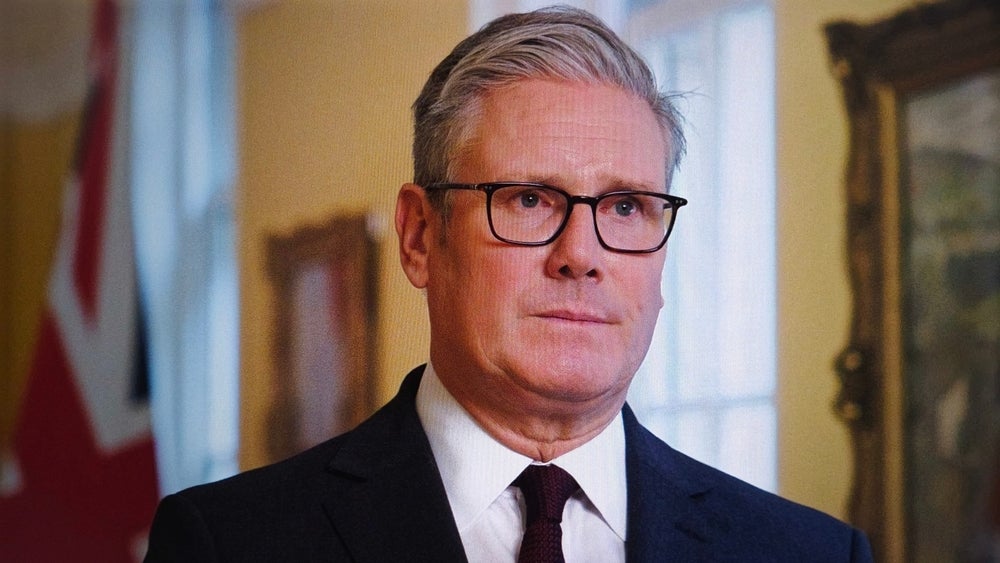
Construction entrepreneur and TrueNorth Capital Group founder Bradley Lay has warned that political uncertainty following the resignation of Prime Minister Keir Starmer will create fresh challenges for UK construction firms already facing significant structural pressures.
Lay, who has spent more than two decades in the industry and has specialised in acquiring construction businesses over the past three years, believes the sector is entering a period where resilience and adaptability will become more important than ever.
He said: “Leadership changes inevitably create uncertainty and markets dislike uncertainty. Whenever there is a vacuum around policy, businesses delay decisions, investors become more cautious and projects slow down.
“The immediate concern for construction firms isn’t necessarily who replaces Keir Starmer, it’s the paralysis that leadership transitions create. Major infrastructure decisions, planning reform and investment programmes often stall while everyone waits for clarity.”
Lay believes many firms are underestimating the combined impact of political uncertainty, changing cost dynamics and weaknesses within traditional contracting models.
“The reality is we’re seeing three structural shifts happening simultaneously,” he said.
“Firstly, political uncertainty creates hesitation across the market. Developers, investors and lenders all become more cautious when they don’t know what future tax policy, regulation or public spending priorities might look like.
“Secondly, energy prices have fallen sharply following the end of the conflict in Iran, but supply chains haven’t yet caught up. Tender prices are still reflecting higher material costs which creates opportunities for firms with strong supplier relationships and disciplined procurement.
“Thirdly, and perhaps most importantly, the repeated collapse of major contractors demonstrates that parts of the traditional main contractor model are fundamentally broken.”
Lay points to the failures of Carillion, ISG and most recently Ardmore Construction as evidence that many firms are operating with structurally flawed business models.
“These failures aren’t isolated incidents,” he said.
“Too many businesses are chasing turnover rather than profit, relying on wafer-thin margins and using supplier credit as working capital. Eventually that catches up with them.
“Having reviewed hundreds of businesses through our own acquisition pipeline, there is a clear pattern. Specialist subcontractors with strong balance sheets, recurring relationships and proprietary expertise are proving far more resilient than large volume-driven contractors.”
Lay says firms attempting to predict political outcomes are focusing on the wrong problem.
“Nobody knows exactly what the next six or twelve months will look like politically,” he said.
“But successful businesses aren’t built around predicting the future perfectly. They’re built around being able to absorb uncertainty when it arrives.
“Political uncertainty will eventually pass. Material prices will stabilise. More businesses, unfortunately, will fail. But the companies that thrive will be those with strong balance sheets, predictable cash flow and management teams that understand the difference between revenue and profit.”
Through TrueNorth Capital Group, Lay is actively acquiring specialist businesses operating across MEP, external envelope and facades, and manufacturing and offsite construction.
He says the group’s long-term strategy has been designed specifically around resilience rather than short-term market cycles.
“Our acquisition criteria are simple,” he said.
“We look for predictable cash flow, defensible market positions and management teams with long-term thinking.
“Strategies that depend on political stability, cheap materials or competitors remaining solvent aren’t strategies at all. They’re dependencies.
“The firms that emerge strongest from the next few years will be those that build operating models capable of handling uncertainty rather than hoping uncertainty disappears.”