
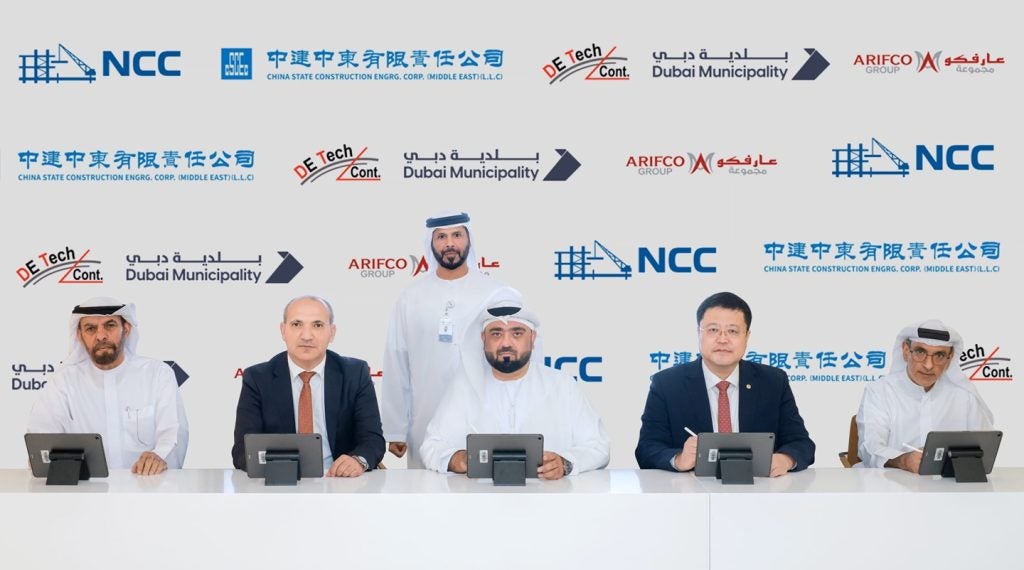
Dubai Municipality has awarded contracts totalling Dh3bn ($817m) for four new projects as part of the third phase of the Tasreef Programme, an initiative to upgrade and expand the emirate’s stormwater drainage system.
The municipality confirmed that the latest contracts will cover the construction as well as extension of nearly 100km of main stormwater drainage lines, with diameters of up to 3m.
The new projects will be implemented across vital business, industrial, tourism and residential areas, including Jumeirah, Umm Suqeim, Al Safa, Al Manara, Al Quoz, Al Barsha, Al Wasl, Za’abeel, Al Bada’a, Al Satwa and Al Marmoom.
Collectively, the developments will serve nearly 100km², connecting these areas to the city’s main drainage network and aiming to strengthen flood resilience.
According to Dubai Municipality, these projects are intended to increase the water-flow capacity of the drainage network and improve operational resilience, with an eye on supporting sustainable urban growth and the city’s future infrastructure needs.
Dubai Municipality director general engineer Marwan Ahmed bin Ghalita said: “Dubai Municipality continues to implement the phases of the ‘Tasreef’ Programme, one of Dubai’s largest strategic infrastructure projects, enhancing its efficiency and resilience, making it more sustainable and strengthening its ability to address both future climate change and accommodate population and urban growth.”
The third package of projects is a continuation of the Tasreef Programme, which Dubai Municipality describes as the largest integrated stormwater collection programme in a single system in the region.
With a total planned investment of Dh30bn, the overall initiative is expected to boost Dubai’s stormwater drainage capacity by 700% and reduce long-term operational and maintenance costs by 20%, as well as align with the city’s 2040 Urban Master Plan and the UAE Net Zero 2050 Strategy.
The Jumeirah and Umm Suqeim Stormwater Drainage Network Development Project is designated as one of the largest elements under phase three. It involves constructing around 42km of main drainage lines to support communities from Umm Suqeim 1–3 through to Jumeirah 3, Al Safa and Al Manara, following the Dubai Water Canal corridor.
Elsewhere, work will begin on a project to develop stormwater drainage between Sheikh Zayed Road and Al Khail Road, providing 14km of main lines and serving major interchanges, corridors, and industrial areas such as Al Quoz and Al Barsha.
Another scheme will create an integrated network along Al Wasl Road and areas east of the Dubai Water Canal, including Za’abeel 2, Al Wasl and Dubai World Trade Centre, covering 25km² with 21km of new conveyance lines.
A further project in Al Marmoom will deliver 23km of stormwater infrastructure with the stated aim of improving service continuity and the quality of urban infrastructure in the area.
Dubai Municipality stated it is proceeding with the projects according to approved schedules and operational plans, as part of efforts to reinforce Dubai’s preparedness for future climate-related challenges and reduce the risks associated with heavy rainfall and water accumulation.