

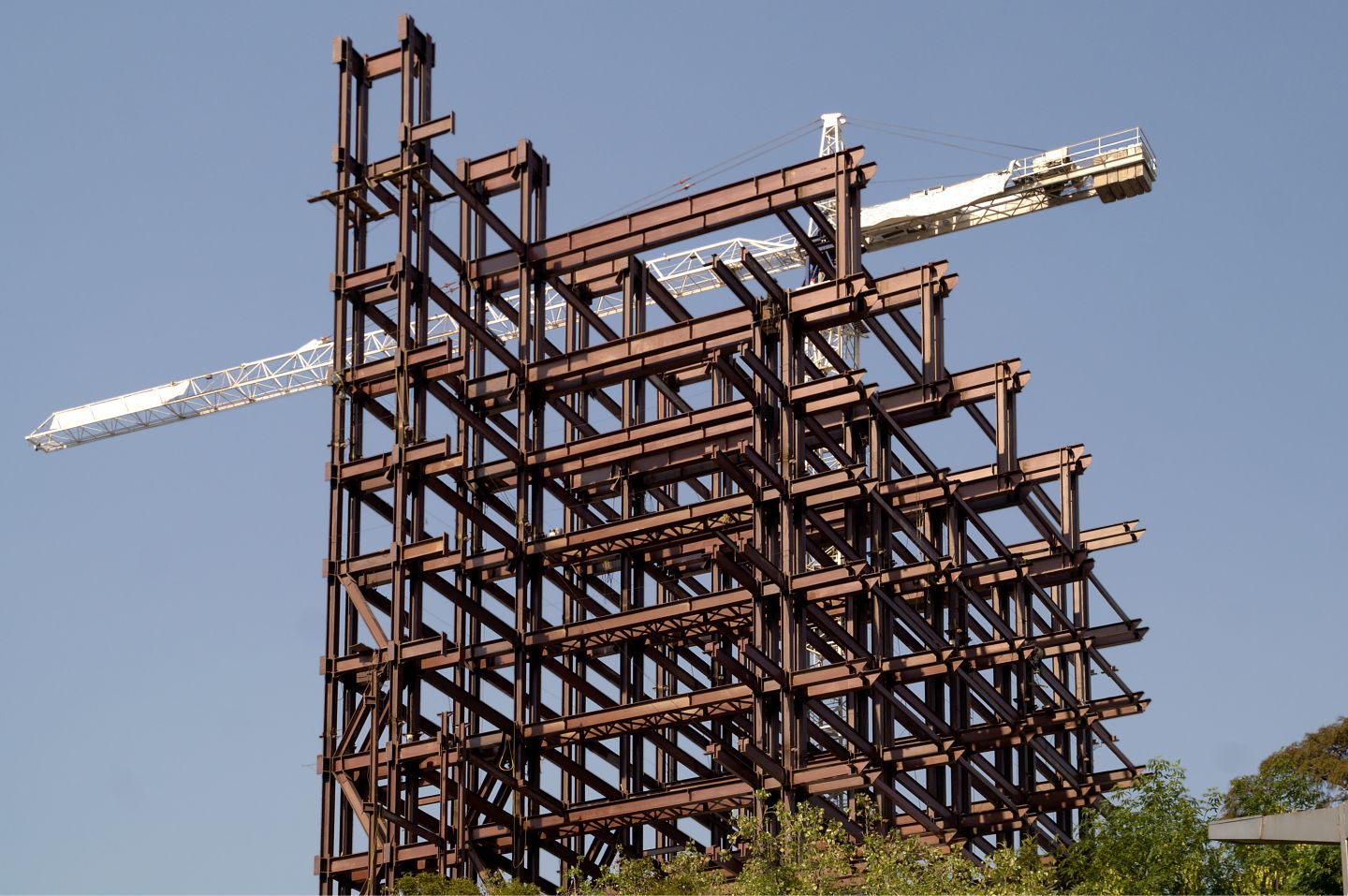
According to the National Institute of Statistics and Geography (INEGI), the gross fixed investment in non-residential construction fell by 6.5% year-on-year (YoY) in November 2025, compared to YoY declines of 12.1% in October and 16.8% in September 2025. Notably, the gross fixed capital formation on buildings fell by 13.3% YoY in the first 11 months of 2025, which is driven by a sharp fall of 23.2% YoY for non-residential buildings and a marginal decline of 0.7% YoY for residential buildings during the same period.

The sluggishness in the non-residential sector is attributed to heightened market and financial risks, largely stemming from the ongoing tariff war between the US and its trading partners, which have made foreign companies more cautious about operating in the country. In another setback to the construction industry, reduced hydropower generation from ongoing droughts has forced production halts and increased energy prices. Economic risks from President Trump’s foreign policy are also impacting multinational investors and export-oriented businesses. Several projects, including the Maya Train, have faced significant cost overruns and cancellations, highlighting bureaucratic inefficiencies. The Maya Train’s estimated cost rose by 176.1%, from 197bn pesos ($9.9bn) in 2018 to 544bn pesos ($27.3bn) by 2024, mainly due to mismanagement.

Access deeper industry intelligence

Experience unmatched clarity with a single platform that combines unique data, AI, and human expertise.

Find out more

These challenges resulted in a decline in the confidence of the construction industry. According to the latest Monthly Business Opinion Survey conducted by INEGI, the construction confidence index registered a score of 45.5 in January 2026 (the threshold which separates expansion from contraction), compared to 48.1 in January 2025. This is preceded by scores of 45.1 in December and 46 in November 2025. The average construction confidence index stood at a score of 46.6 in 2025, compared to a score of 50.4 in 2024. Moreover, the confidence index for the investors to invest in the construction industry is 21.7 in January 2026, compared to 22.8 in January 2025. This is preceded by scores of 18.2 in December and 20.5 in November 2025. The average confidence index stood at a score of 21.5 in 2025, compared to a score of 29.9 in 2024.

In addition to this, according to the INEGI, the index for the future economic situation of the country was 51.8 in January 2026, compared to 55.6 in January 2025. This is down from scores of 54.8 in December and 54.1 in November 2025. The average index stood at a score of 54.1 in 2025, compared to a score of 56.7 in 2024. This is attributed to widespread violence, which cropped petrifying situation for businesses to operate within the country. The business climate has worsened in the first quarter of 2026, with the members of criminal organisation, Jalisco New Generation Cartel (CJNG), unleashing a wave of violence in late February 2026 across 20 Mexican states. This included erecting burning blockades and torching businesses in retaliation for the death of their leader, Nemesio Oseguera Cervantes.

Following a decline of 1% in real terms in 2025, GlobalData expects Mexico’s construction industry to remain under pressure in 2026. Over the forecast period (2027-2030), the Mexican Government’s Sectoral Infrastructure, Communications and Transport Program 2025-2030 will boost the civil engineering works. The program includes the construction of over 3,000km of new passenger rail lines by 2030. Growth will also be supported by the National Electric System Strengthening and Expansion Plan 2025-2030, announced in April 2025. The plan includes an investment of 624.6bn pesos ($31.3bn) to add 29.1GW of new electricity generation capacity. It will fund 158 transmission projects and complete 42,221 electrification projects by 2030. 

GlobalData Strategic Intelligence

US Tariffs are shifting - will you react or anticipate?

Don’t let policy changes catch you off guard. Stay proactive with real-time data and expert analysis.

By GlobalData
