

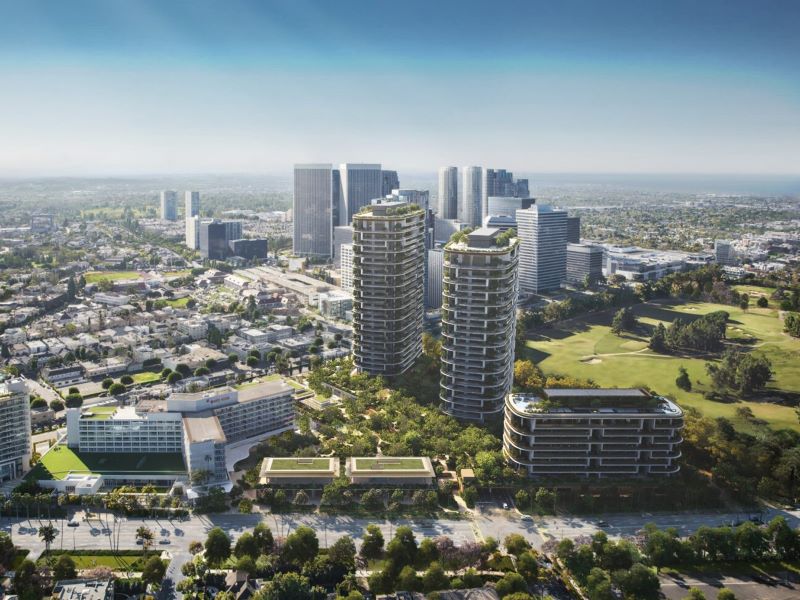
One Beverly Hills is a mixed-use luxury development in Beverly Hills, California, US.
Spanning 17.5 acres in the city centre, the $10bn scheme is being developed by a joint venture of Cain International and Alagem Capital Group. It is among the highest-value private real estate developments currently under way in the US.
Recommended Buyers Guides

Oko Group, a real estate firm based in Miami, is serving as a development partner.
The project aims to integrate the existing Beverly Hilton and Waldorf Astoria Beverly Hills into a single site offering facilities for hospitality, wellness, retail and dining.
Approval for the development was granted by the Beverly Hills City Council in June 2021, with project details announced the following month.
The development will be delivered in phases. Construction on the project commenced in February 2024, while vertical construction began in November 2025.
The initial phases are scheduled for completion in 2027. The project is expected to generate more than 2,700 construction jobs locally.
One Beverly Hills location
The One Beverly Hills development is situated at the western entrance to Beverly Hills near Rodeo Drive.
The scheme is being built on a site that has remained unused for an extended period and is recognised as the gateway to the Beverly Hills retail district.
The mixed-use scheme will connect the Waldorf Astoria and a renovated Beverly Hilton with the residences and hotel being developed as part of the project.
One Beverly Hills details
The One Beverly Hills development combines 14 acres of new construction totalling 1.375 million square feet, along with the refurbishment of the Beverly Hilton.
The project will introduce three environmentally sustainable buildings including two Aman-branded residential towers of 28 and 32 storeys, with 197 condominiums offering expansive balconies and select units having private pools.
A third building will contain a ten-storey, 78-suite luxury Aman Beverly Hills hotel and a 100,000ft2 (9,290m2) Aman Club.
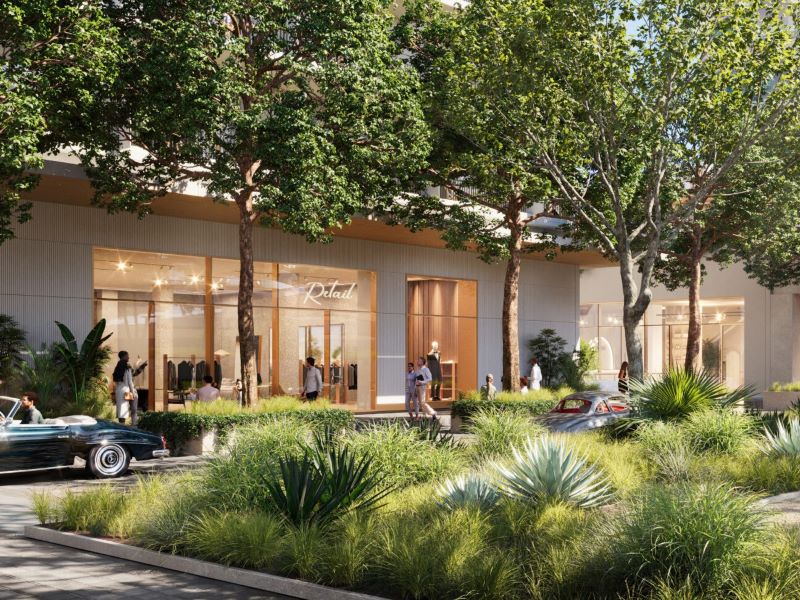
A three-storey retail building comprising 200,000ft2 (18,581m2) of designer retail and dining establishments, and wellness amenities, along with a 38,000ft2 conference centre, are also part of the development.
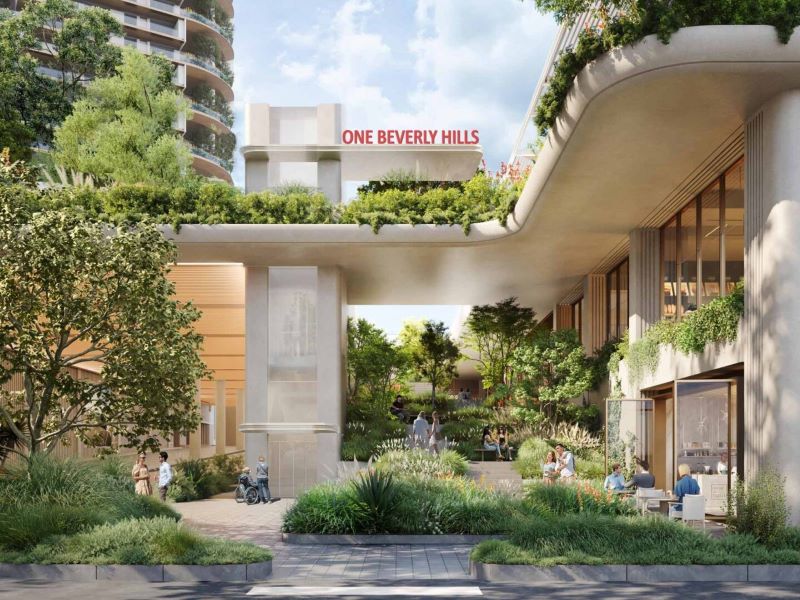
The retail environment is designed to be closely integrated with the landscape, linking shopping, dining and leisure facilities with the adjacent hotels and residences to create a unified lifestyle destination.
Initial retail and dining partners include Casa Tua Cucina, Los Mochis and Dolce & Gabbana, joining a collection of up to 45 luxury boutiques and premium dining establishments in the area.
A subterranean car park with approximately 2,000 spaces will be provided to serve the development.
Structural details
The project buildings have been designed with strong seismic performance.
A typical tower floor plate will comprise a post-tensioned slab, with a locally recessed section to accommodate the pool; this area is detailed as a lightly reinforced slab. Seismic resistance is provided by twin reinforced concrete core shear walls.
Seismic separation joints have been incorporated to isolate the private elements of the scheme from the public areas.
A further joint is provided within the private zone to separate the residential tower facing Santa Monica Boulevard.
Facade details
The facade concept comprises a range of high-performance envelope systems, paired with premium finishes, across the project’s retail, residential and hotel components.
The solid elevations of the towers incorporate a large-format natural limestone rainscreen facade system. The glazed areas are designed with a high-performance, slim-profile sliding door solution, including pocket configurations and concealed sills, to create a seamless indoor–outdoor connection when open.
These systems have been bespoke-designed and adapted to satisfy stringent thermal and acoustic performance criteria, while accommodating significant structural movement and deflection without compromising performance.
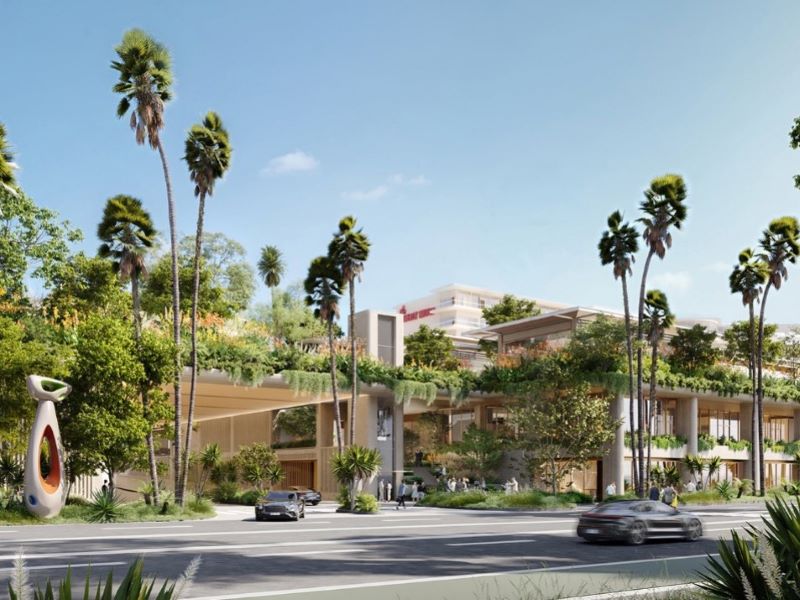
At the lower podium levels housing the retail elements, the facades use specialist exposed-concrete finishes and a glazed frontage.
The upper retail pavilions are topped with lightweight steel canopies incorporating brise-soleil shading to reduce solar gain, allowing high-clarity glazing to be used throughout the retail areas.
Landscaping
The masterplan features ten acres of landscaped open space and gardens designed to provide a sustainable environment focused on wellness, with areas intended for relaxation and exploration.
The landscape design draws inspiration from California’s diverse ecosystems, incorporating elements such as oak-shaded areas, meadows and coastal bluffs.
Features will include pollinator gardens, colour-themed plantings and water features, each intended to reflect the natural character of southern California.
More than 500 trees will be planted to create an urban forest, contributing to carbon capture, shade provision and habitat support.
Specific garden areas include the Aman Palm Garden, the Club Garden shaded by live oaks and Arbutus trees, and the Hotel Garden, which opens onto wildflower meadows and pools.
Rooftop and balcony gardens will further integrate greenery into private residential spaces.
Financing
In March 2024, Cain obtained $2bn in construction financing for the One Beverly Hills development. Latham & Watkins served as adviser on the transaction, which includes a $500m senior loan from JPMorgan Chase alongside additional private financing arrangements.
In February 2025, VICI Properties announced a collaboration with Cain and Eldridge Industries regarding the contribution of a $300m investment through a mezzanine loan associated with the project.
Sustainability features of One Beverly Hills
The One Beverly Hills development incorporates a range of sustainable strategies with the objective of reducing emissions and energy consumption.
The development aims to achieve at least LEED Gold and WELL certifications through measures such as efficient building envelopes, adaptive controls, advanced technologies and circadian LED lighting to enhance occupant well-being.
The design also optimises daylight, ventilation and high-grade filtration to support indoor air quality.
The project will utilise a central geothermal system comprising 350 geothermal wells to generate heat, hot water and provide cooling. This system also decreases the need for cooling towers, resulting in substantial water savings.
To support energy resilience and grid stability, the project will feature a centralised battery storage system, an on-site photovoltaic array and chilled water thermal energy storage. These systems will help manage electricity demand and reduce reliance on external power sources.
The new buildings will be constructed using recycled materials with low embodied carbon and toxicity.
Provisions for multimodal transport including walking cycling, and alternative mobility options, as well as extensive electric vehicle charging infrastructure in the underground car park, are part of the scheme.
The landscape design intends to achieve complete water sustainability by using collected rainwater and recycled greywater for irrigation. Water management in the gardens is supported by reclaimed water systems and on-site stormwater capture, using advanced controls to reduce water consumption and urban heat.
Architects and contractors involved
Foster + Partners is responsible for the master planning of the development.
Adamson Associates is serving as the executive architect for the overall development, while Los Angeles-based design company RIOS is in charge of landscape architecture.
Kerry Hill Architects is leading the design of two Aman-branded residential towers, the Aman Hotel and the Aman Club.
David Collins Studio has overseen the comprehensive redesign of the Beverly Hilton.
Turner Construction Company has been appointed as the overall site manager and is responsible for the first phase of construction as well as the coordination of the entire project.
Glumac is handling sustainability and health consulting, as well as mechanical, electrical and plumbing engineering design. Saiful Bouquet Structural Engineers is providing structural engineering services.
Layton has been selected to deliver the 32-storey luxury residential high-rise building.
Suffolk is managing preconstruction and construction activities for the first Aman-branded residential tower.
Additional consultants engaged on the project include KGM Architectural Lighting, Consentini, Gardiner & Theobald, L’Observatoire International and Calex Engineering Company.
