

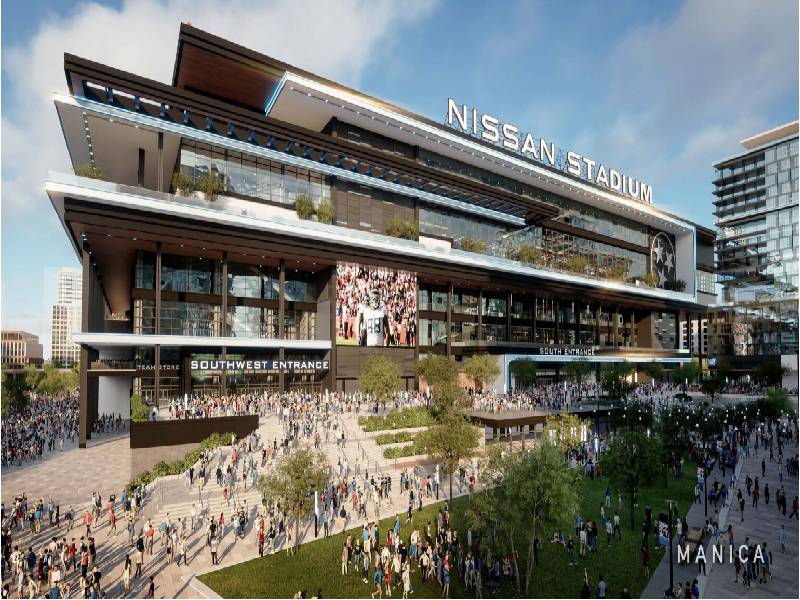
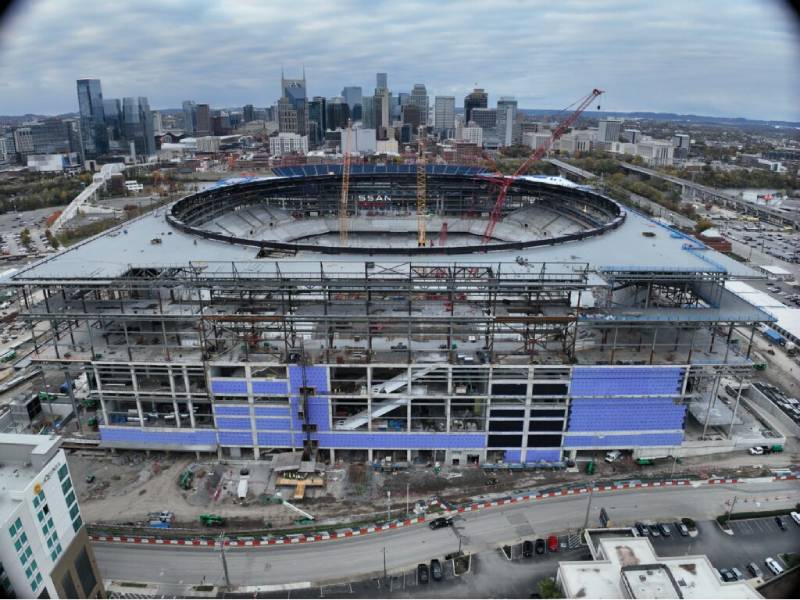
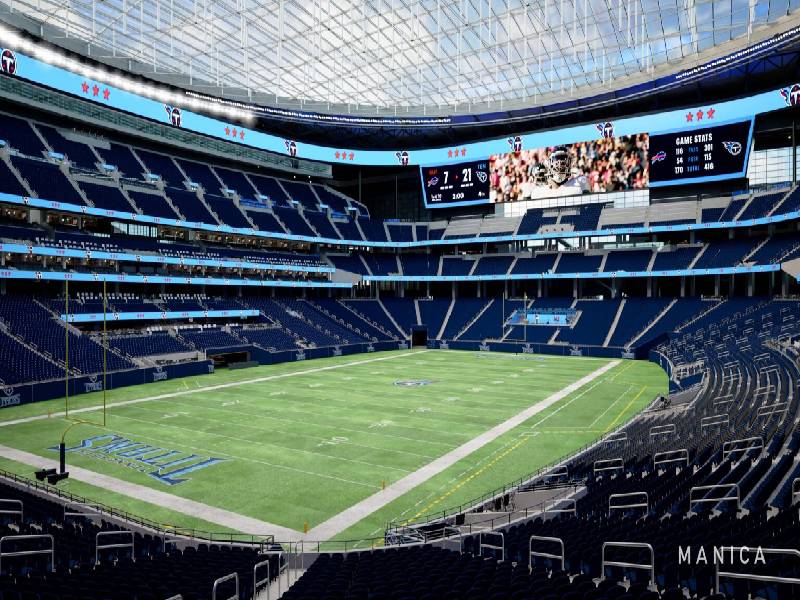
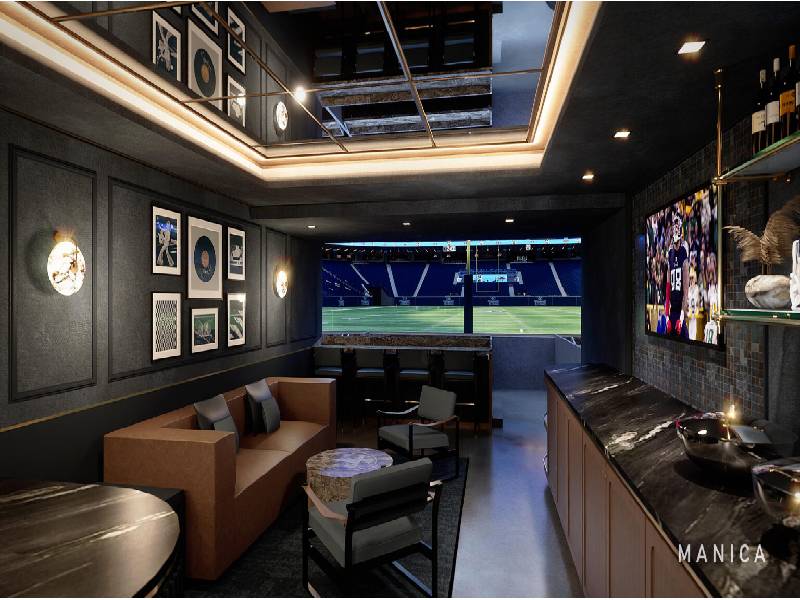
The New Nissan Stadium is a new stadium venue being developed in Nashville, Tennessee, US.
With a capacity of 60,000 seats, the stadium will host a range of sporting, entertainment and civic events and will be the home ground for the NFL’s Tennessee Titans under a 30-year lease.
Recommended Buyers Guides

Construction began with a groundbreaking in February 2024, with completion anticipated in 2027.
The stadium aims to achieve LEED Gold certification from the US Green Building Council.
Location
The New Nissan Stadium will be situated on the east side of the existing Nissan Stadium on the East Bank of the Cumberland River in Nashville, Tennessee.
New Nissan Stadium design and features
The New Nissan Stadium will be an enclosed stadium covering more than 1.8 million square feet (ft2) (167,225m2). The stadium’s main structure will be supported by 767 piers. The final height of the stadium will be 235ft (71.63m) above field level.
The new stadium uses artificial turf covered by a circular ethylene tetra fluoro ethylene (ETFE) translucent roof and features wraparound external terraces. It will also include 12,000ft2 of community space designed to host classes for local schools, provide job training and accommodate other community-focused events.
The stadium’s architectural concept draws on Nashville’s identity and aligns with the City of Nashville’s wider East Bank regeneration programme. Its design prioritises flexibility, enabling the venue to host a broader range of events and maximise year-round use.
The project also places strong emphasis on sustainability, aiming to reduce waste and achieve net-zero energy and water performance. A water cistern tank at the stadium will collect 100,000 gallons of rainwater and contribute to the stadium’s sustainability efforts.
The stadium will feature a 50,000ft2 video board system, comprising four main boards and a ‘Ring of Fire’, an upper bowl ribbon-style LED display encircling the stadium.
A multi-level team store will be located within the new stadium, alongside the Tennessee Sports Hall of Fame on the West side.
Seating and amenities at New Nissan Stadium
The stadium’s seating is divided into three categories. The first wave consists of all premium seat memberships. These seats are in the lower bowl between the 15-yard lines and offer luxury seating, food and beverage options, a dedicated entrance and other premium amenities.
The second wave includes the remaining lower bowl seats, seats in the 200-level and midfield sections on either side of the terrace level.
These reserved seats are positioned 38% closer to the field than those in the current stadium, with padded seating, merchandise and concession discounts, and invitations to exclusive events. The seats also provide access to 360° concourses and patio spaces throughout the venue.
The stadium will also feature studio boxes with four, six or eight seats, featuring 28in loungers, customisable refrigerators, televisions and counter space. These boxes are positioned around the stadium with sideline views, ten rows from the field.
Additionally, 11 luxury suites, known as the Touchdown Suites, will be located behind the West endzone. More than 15 event spaces will be available for meetings and gatherings, with capacities ranging from 50,000 to 60,000, along with several club spaces and terraces.
Construction details
Construction of the project required approximately 400,000 cubic yards of soil to be excavated, and this phase concluded in July 2024. Foundation works were completed in December 2024.
Steel assembly for the seating bowl began in January 2025. The seating bowl was formed and cast near Atlanta, comprising nearly 2,500 pieces known as ‘stadia’. Installation of these components began in February 2025.
Installation of the ETFE cable-stayed roof structure started in June 2025, with the final ring beam placed in November 2025.
The full concrete and steel structure was completed, with a topping-off ceremony held in November 2025.
Funding details
The Titans are contributing $840m towards the stadium’s funding and are responsible for any cost overruns. The State of Tennessee is providing $500m.
The remaining $760m of the $2.1bn budget will be financed through revenue bonds issued by the Metro Sports Authority.
The bonds are to be repaid via a 1% increase in Davidson County’s hotel occupancy tax, in-stadium sales tax, 50% of sales tax from future development of the stadium’s campus, rent from the team and a pre-existing $3 ticket tax.
Contractors involved
The venue is designed by MANICA as the lead design architect, in partnership with TVS as architect of record and EOA as the associate architect.
HASTINGS Architecture was appointed by MANICA as the concept phase exterior design consultant.
Other architects include Community Solution By Design, Culture Architecture and Design, Downstream, Ed Roether, EP Atelier, Hawkins Partners and McCoy Design.
Tennessee Builders Alliance, comprising I.C.F. Builders, Polk & Associates, Turner Construction Company and AECOM Hunt, is the construction manager.
Logan Patri Engineering and Walter P Moore are the structural engineers.
RaganSmith is the civil and geospatial engineer, while TRC Worldwide Engineering is responsible for precast engineering and project management of all precast stadia, slabs, stairs and wall panels.
HLB Lighting Design is responsible for speciality lighting and Smith Seckman Reid is the mechanical, electrical and plumbing engineer.
In March 2025, Schneider Electric was named the Official Energy Management Partner, responsible for backup power, IT infrastructure, electrical power distribution and control systems, and the integrated building management system.
CAA ICON, in partnership with Don Hardin Group, is delivering project management services for the project.
Other contractors involved include Daktronics, Cumming Group, HOCHTIEF, Howe Engineers, Lloyd, ME Engineers, Momentum Transport Consultancy, Persohn Hahn, Producto Electric, Pinnacle Financial Partners, Salas O’Brien, S2O, Simpson Gumpertz & Heger and WJHW.
